💰 Cost: €0 · 🔧 Difficulty: Easy — no contractor needed
You just bought a new sofa. Or rearranged the furniture. Or added that accent chair you’ve been eyeing. And somehow, instead of making your living room feel complete, it now feels… tighter. Crowded. Like the walls moved in overnight.
Here’s the thing: a cramped living room usually isn’t about square metres. I’ve seen 23 m² apartments that feel spacious and 37 m² living rooms that feel like you’re playing Tetris just to walk through. The difference? It’s not the size of the room. It’s how the furniture talks to the walls, the windows, and each other.
If your living room feels cramped even though you “should” have enough space, you’re probably making one of three mistakes. The good news? All of them can be fixed this weekend without buying a single new piece of furniture.
The Three Things Making Your Living Room Feel Smaller Than It Is
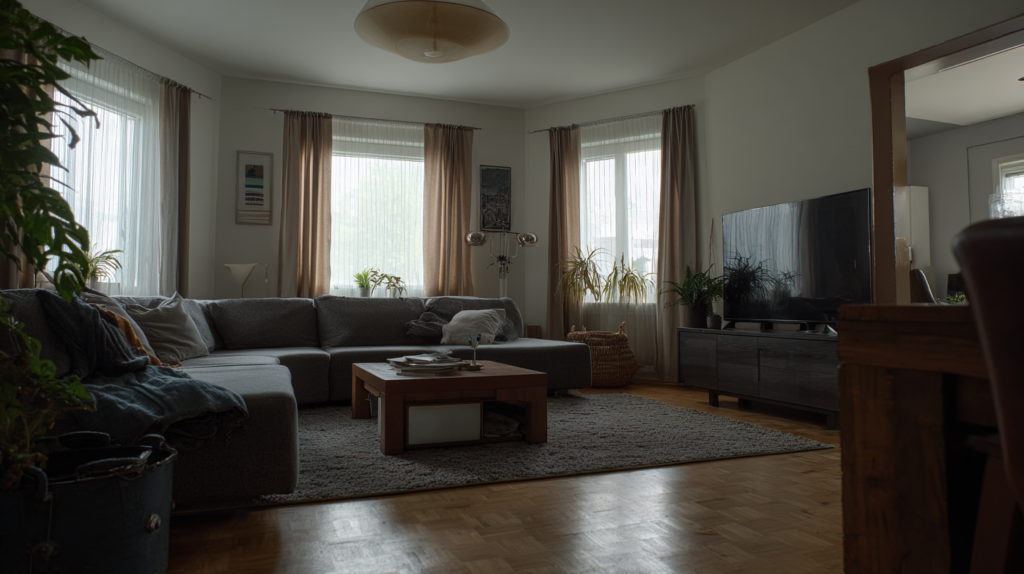
1. Everything Is Pushed Against the Walls
This is the big one. It feels intuitive — push furniture to the edges, create space in the middle, right? But here’s what actually happens: you create a lifeless empty centre and a cluttered perimeter. Your eye reads the room as smaller because it stops at the furniture line, not the wall line.
Pull your sofa 30–45 cm away from the wall. Yes, really. It sounds counterintuitive, but floating your furniture creates depth. Suddenly the room has layers — there’s space behind the sofa, the seating area itself, and the space beyond. Your brain registers all that depth as “bigger.”
Design Tip
If your room is truly tiny (under 14 m²), keep the sofa against the wall but pull the coffee table closer and float your accent chairs. Even small moves create that sense of layering.
2. Your Furniture Is the Wrong Scale
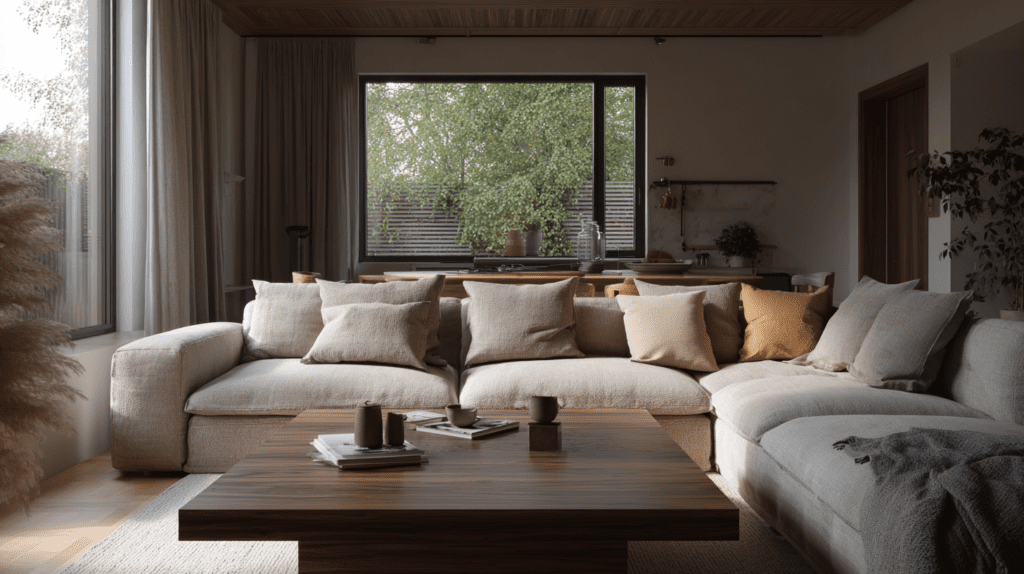
A too-big sofa makes a room feel tight. But so does furniture that’s too small — a bunch of tiny pieces scattered around makes the room look like a dollhouse, not a curated space.
One properly sized anchor piece (your sofa) plus a few smaller supporting pieces (side tables, accent chairs) creates balance. The rule of thumb: your sofa should take up about two-thirds the width of your main wall.
Measure your wall in metres and multiply by 0.65. That’s your target sofa length. A 3.6 m wall? Look for a sofa around 2.3 m wide.
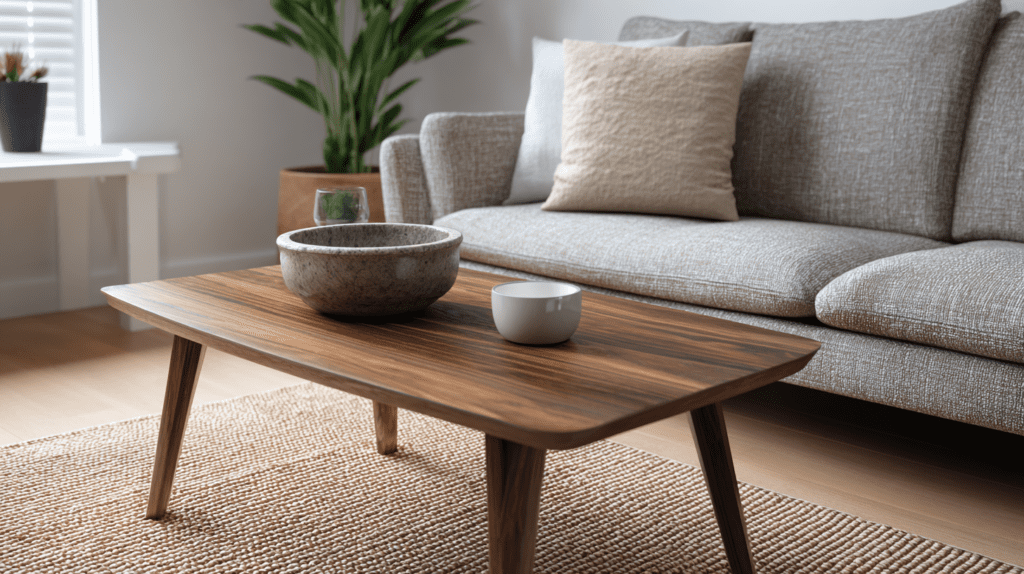
What about the coffee table? It should be about two-thirds the length of your sofa and sit 35–45 cm away from the sofa edge. Too big, and it blocks movement. Too small or too far, and it looks like an afterthought.
Common Mistake
Most people size their sofa to the wall and then buy a coffee table that “looks right” in the shop. Always measure both together at home first — the sofa-to-table relationship is what makes or breaks the layout.
3. You’re Blocking the Pathways
If people have to sideways-shuffle past your coffee table or hop over the corner of your rug, your layout is fighting your room. And when a room fights you, it feels cramped no matter how much space you technically have.
The fix: Walk your main traffic paths — door to hallway, door to kitchen, etc. You need at least 75 cm clear for walkways. If your coffee table or accent chair is cutting into that, scoot it over.
The laundry basket test: Can you walk through your living room carrying a laundry basket without adjusting your path? If not, something’s in the way.
The Weekend Fix: Rearrange in This Order
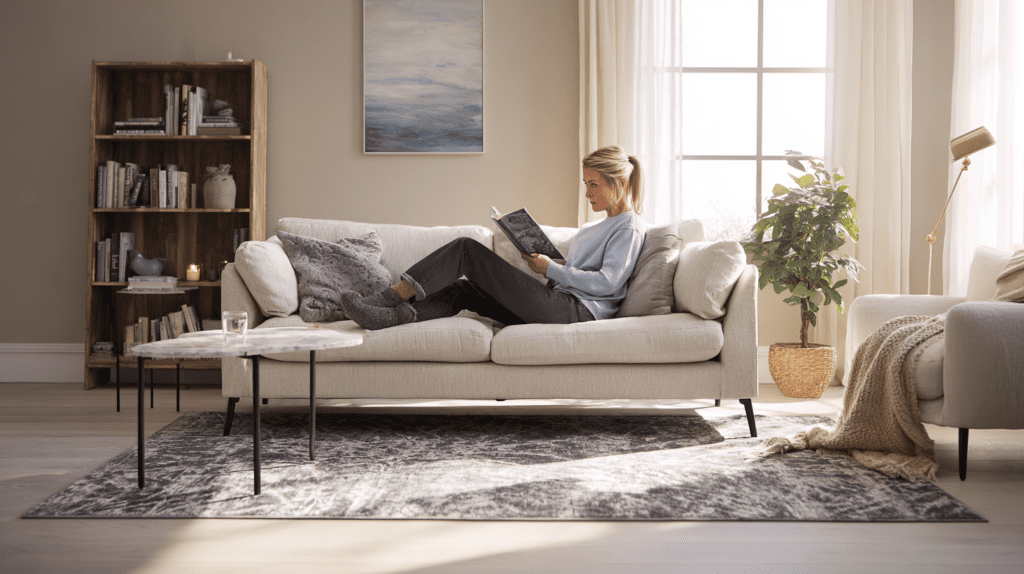
Saturday Morning — The Anchor (1–2 hours)
- Move everything away from the walls. Yes, everything. Put it all in the centre of the room.
- Find your focal point — fireplace, TV, big window, whatever draws your eye first.
- Place your sofa facing that focal point, pulled at least 30 cm from the wall behind it.
- Step back. Does it feel balanced? The sweet spot for sofa-to-focal-point distance is 3–4.5 m.
Saturday Afternoon — The Supporting Cast (2–3 hours)
- Add your coffee table 35–45 cm from the sofa. Make sure you can still walk around it comfortably.
- Place accent chairs or a loveseat across from or perpendicular to the sofa — 2–2.7 m between facing seats is ideal for conversation.
- Float a side table next to the sofa or chair. It doesn’t need to touch the wall.
- Walk your traffic paths. Adjust anything blocking the flow.
Sunday Morning — The Finishing Layer (1 hour)
- Add your rug. At least the front legs of all seating furniture should rest on it. A too-small rug makes the whole room feel smaller.
- Bring in lamps, art, and accessories. Then stop before you think you’re done. Most rooms feel cramped because they’re 10–15% over-decorated. Remove one decorative item from every surface.
When the Layout Still Isn’t Working
Sometimes the problem isn’t your arrangement — it’s the furniture itself. If you’ve tried all this and the room still feels tight, you might need a smaller-scale sofa (apartment sofas are typically 180–200 cm vs. standard 210–245 cm), furniture with legs so you can see the floor underneath, or simply fewer pieces. A sofa plus two chairs often works better than a sectional in a small space. If you’re planning a bigger overhaul and want to get the layout right before you buy anything new, a professional space planner can save you from expensive mistakes.
The Real Test
A week from now, notice how you feel when you walk into your living room. Do you exhale? Do you want to sit down? Can you move through the space without that little mental calculation of “okay, step left, now pivot”?
That’s what a good layout feels like. Not perfect. Not styled for a magazine. Just easy. Like the room is working with you, not against you.
And if you get there just by moving your sofa 30 cm away from the wall? That’s a pretty good weekend.
Ready to take it further?
Some rooms need more than a weekend fix — and that’s okay. We connect homeowners with vetted interior designers, space planners, and home remodelling professionals across Europe who actually know how to work with the spaces most people find tricky. Tell us what you’re working on and we’ll point you in the right direction.