Category: Home Office · #How-To
💰 Cost: €300–€1,500 depending on setup · 🔧 Difficulty: Easy to Moderate — most steps are DIY
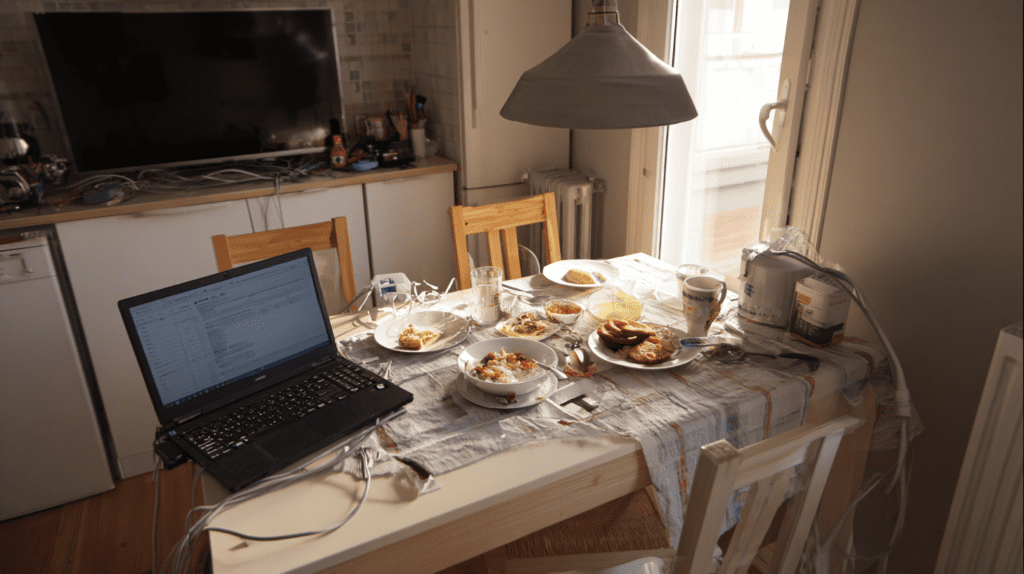
You close your laptop at 6pm, but your home office is also your kitchen table. The same spot where you had breakfast, where you’ll eat dinner, where your partner watches TV two metres away. You don’t finish work — you just stop. And somewhere between the laptop closing and the next morning, the feeling of a working day never quite leaves. By Wednesday you’re exhausted. By Friday you can’t remember when you last felt properly off.
This isn’t a discipline problem. It isn’t about time management. It’s what happens when your brain has no physical signal for when work ends — because the place where you work and the place where you live are exactly the same place. Research on hybrid work is unambiguous on this: without a defined workspace, the boundary between professional and personal time dissolves, and the cost shows up in your energy, your relationships, and the quality of your work itself.
In this guide you’ll find a practical framework for setting up a home office that creates a genuine psychological boundary between work and home — even in a 55 m² Polish blok apartment, without a spare room, and without a large budget. Because the problem isn’t your square footage. It’s that your home office has never been designed to do the one job that matters most.
- Why your home office location is the only decision that matters
- The home office setup that creates a real psychological boundary
- The video call problem nobody talks about
- The home office desk and chair that are actually worth the money
- Cables, clutter, and the detail that makes it look professional
- The home office that gives your evenings back
Why your home office location is the only decision that matters
Most people setting up a home office start by buying a desk. That’s the wrong starting point. The desk is furniture. The location is architecture — and a home office in the wrong location will fail regardless of how good the furniture is.
In a Polish blok apartment, you typically have 50–70 m² and three or four rooms. The question isn’t whether there’s space for a home office — there almost always is. The question is which corner of which room creates the psychological separation that makes working from home sustainable long-term.
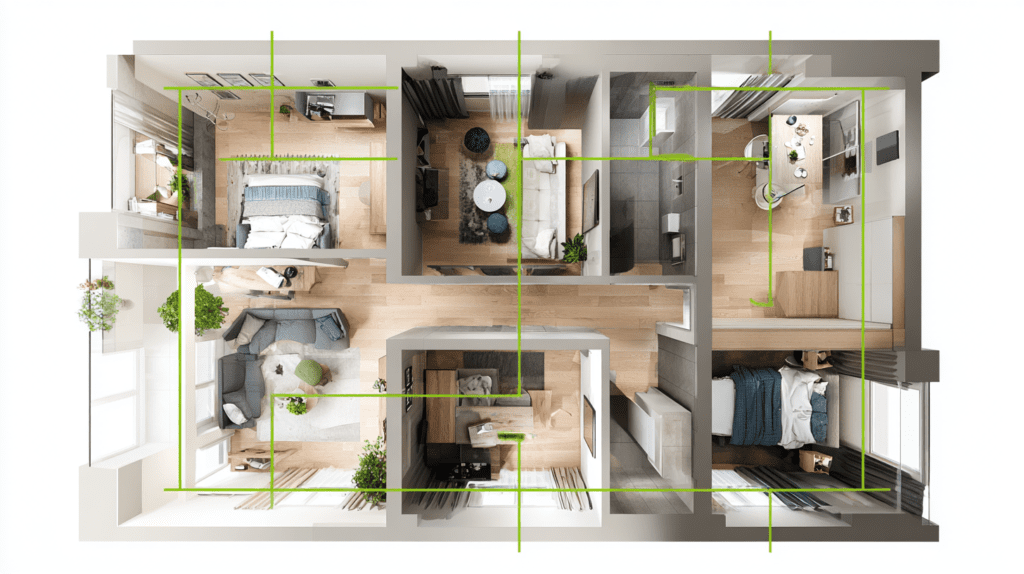
Three things determine whether a home office location works. First, natural light that doesn’t create screen glare — a window to the side of your monitor rather than directly behind or in front of it. Second, what’s visible behind you on video calls. A plain wall, a low bookshelf, or a gallery wall all work. Your unmade bed, your kitchen bin, or your living room chaos does not — and in Poland where hybrid work has made video calls a daily reality for millions of professionals, this matters more than most people admit. Third, acoustic distance from the television and the kitchen. The closer your home office is to those two noise sources, the harder your brain works to stay focused — and the less clearly it registers the end of the working day.
The home office setup that creates a real psychological boundary
Once the location is right, two physical changes create the separation your brain needs. Neither is expensive. Together they change the way you experience the end of every working day.
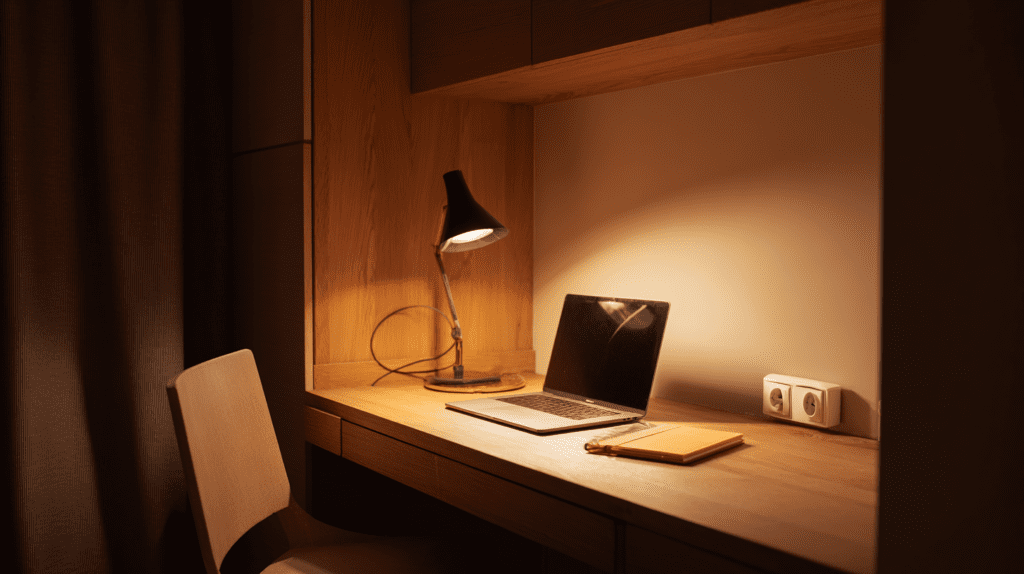
A dedicated lamp that belongs only to work
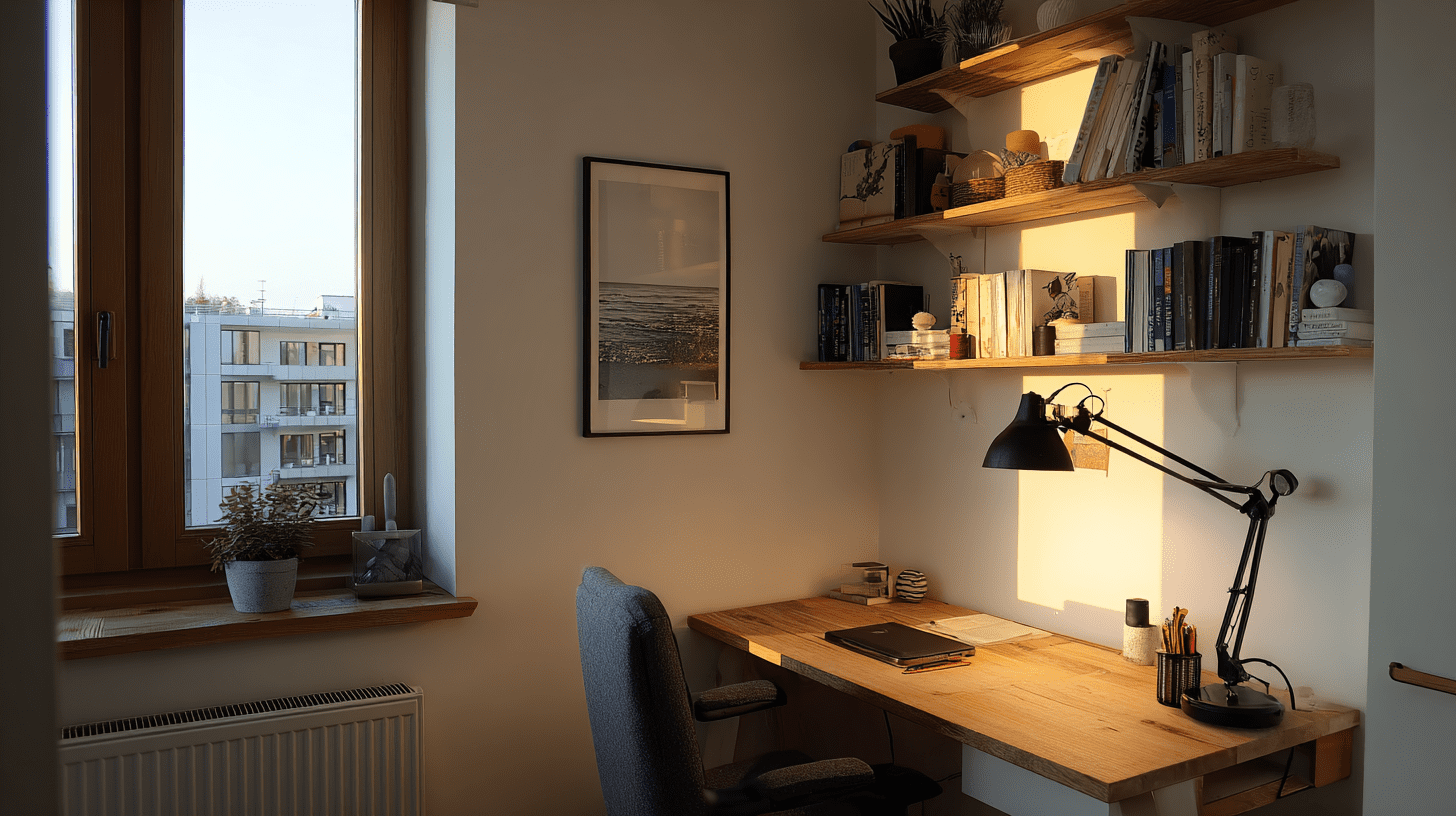
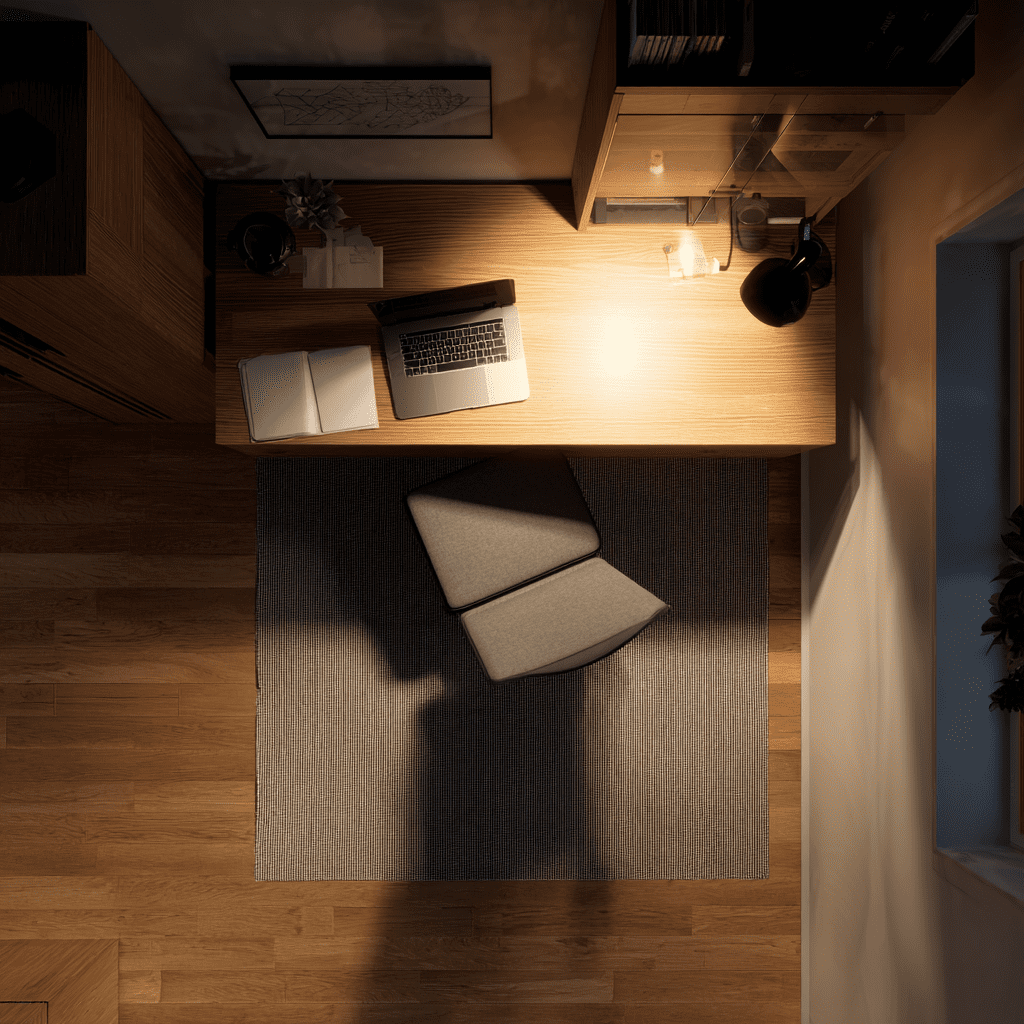
The single most effective home office ritual costs under €60. A desk lamp that is switched on when you start work and switched off when you stop creates a physical, visual signal that overhead lighting cannot. When the desk lamp is on, you’re working. When it’s off, you’ve finished. It sounds almost insultingly simple. But in a small apartment where the same room serves multiple functions, physical signals are the only way to create time boundaries that stick.
A rug that defines the zone
A 120×180 cm rug placed under or in front of your home office desk does something that no amount of tidying achieves: it creates a visual boundary between the work zone and the rest of the room. When you’re standing on the rug, you’re working. When you step off it, you’ve left. Our guide on choosing the right rug size covers exactly how to size this correctly — the same principle that makes a living room feel anchored works equally well to define a home office zone.
Together, the lamp and the rug give your brain two consistent environmental cues for the start and end of the working day. After two or three weeks, the response becomes automatic. The exhaustion that comes from never quite leaving work starts to lift.
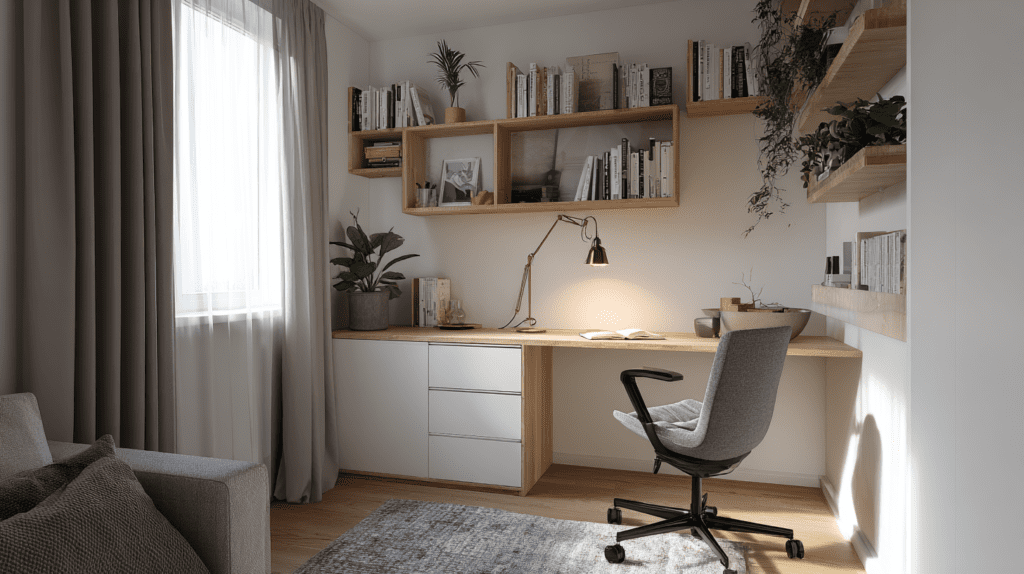
At the end of every working day, do three physical things: close the laptop, switch off the desk lamp, and turn your chair away from the desk. Each action takes five seconds. Together they form a closing ritual that tells your brain the working day has ended. In a blok apartment where the home office shares space with your living room or bedroom, rituals are the architecture you can’t build.
The video call problem nobody talks about
There is a professional cost to a bad home office setup that most people underestimate. In Poland, where approximately 30% of office workers now work hybrid schedules, the background visible in your video calls is part of your professional presence. It is seen by your colleagues, your clients, and your manager several times a week, every week, for years.
A kitchen table home office has a typical video background of: wall cabinets, a window, or a living room in varying states of order. None of these communicates that the person on screen is operating from a considered, professional environment. That subtle impression compounds over time in ways that are hard to measure but entirely real.
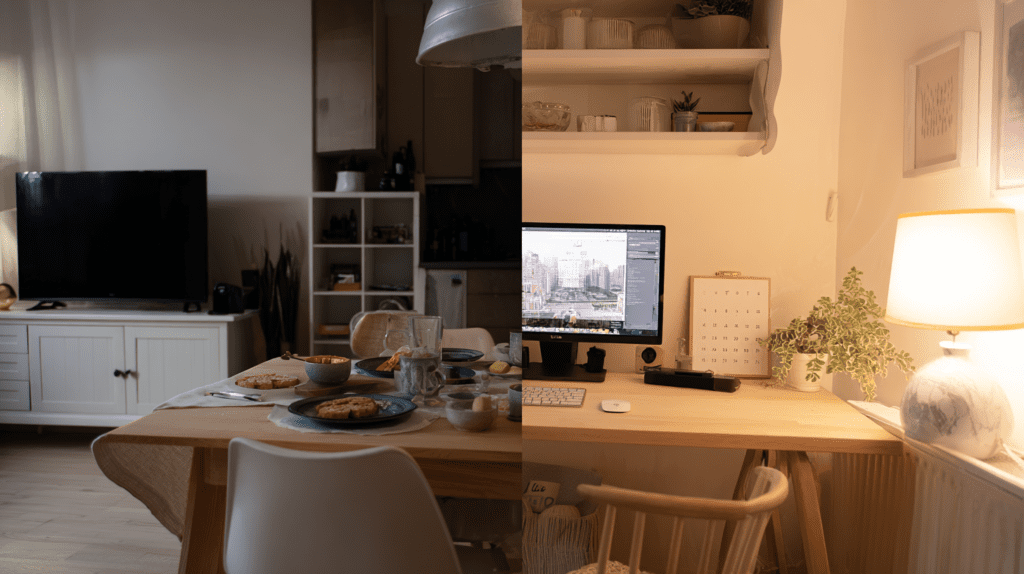
In addition, your video call quality depends substantially on how your face is lit. The standard problem is a window directly behind you — it silhouettes you on camera. A window to the side, or a ring light or soft-box lamp positioned in front and slightly above eye level, solves this. Furthermore, warm-toned LED lighting (2700–3000K) looks significantly more natural on camera than the cool white lighting common in apartments.
The fix is straightforward. A home office corner with a styled shelf behind you — books, a small plant, one or two considered objects — creates a background that reads as professional and personal simultaneously. It takes fifteen minutes to arrange and costs nothing if you already own the objects. However, the lighting matters as much as the background. A window directly behind you silhouettes your face on camera. Warm-toned lighting (2700–3000K) at face height — from a desk lamp positioned slightly above eye level and to one side — transforms how you look on screen. This single change is the most visible improvement most people can make to their professional presence without spending anything significant.
The home office desk and chair that are actually worth the money
Most people setting up a home office spend too much on the desk and too little on the chair. This is the wrong allocation. The desk needs to be large enough — minimum 120×60 cm — and positioned correctly. Beyond that, it’s furniture. The chair is the piece of equipment you’ll use for thousands of hours. It is the thing your back feels by Thursday.
A good ergonomic home office chair with proper lumbar support, adjustable armrests, and seat depth adjustment costs €300–€600 in Poland. That is the investment that determines whether working from home feels sustainable or slowly damaging. The desk can be a simple oak-effect surface on wall brackets for €80. The chair should not be the cheap version.
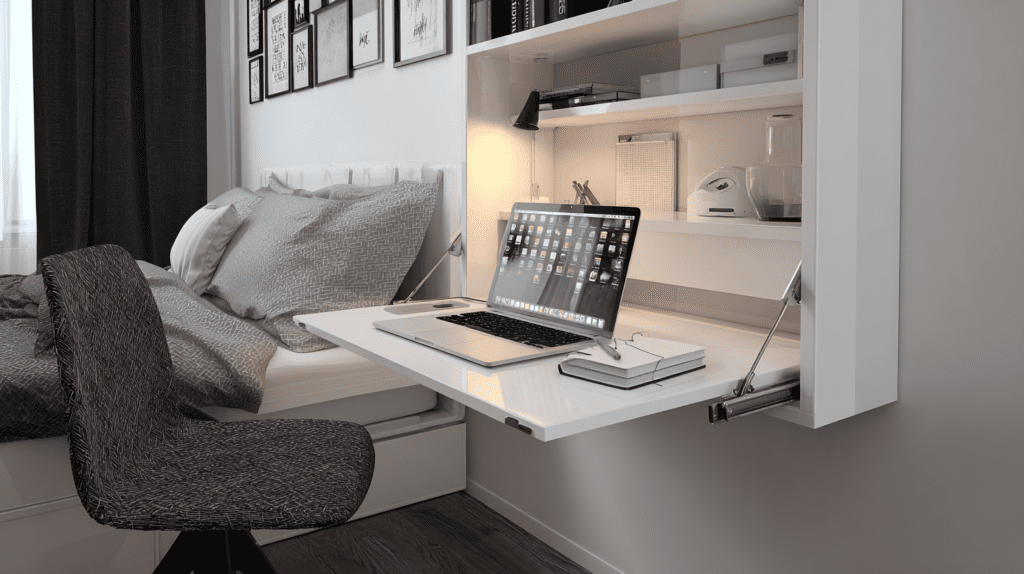
For very small apartments — under 45 m² — a wall-mounted fold-down desk solves the footprint problem. When open it provides a full working surface. When closed it disappears entirely, and the room returns to its other function. The trade-off is that you can’t leave work in progress between sessions. In practice, most people find this forces a cleaner end-of-day habit, which compounds the psychological boundary benefit described above.
🔨 Need a professional for this project?
A custom built-in home office — desk, shelving, and cable management designed specifically for your wall dimensions and equipment — transforms a corner into something that looks and works completely differently from any flat-pack solution. In Poland, a good carpenter can deliver this for €600–€1,200. Furnero connects you with vetted professionals across Europe.
Cables, clutter, and the detail that makes it look professional
A home office can have the right location, a good chair, and proper lighting — and still look chaotic if cable management is ignored. Visible cable clutter is the single visual element that most undermines an otherwise considered workspace. It also signals, subconsciously, that the setup is temporary. And temporary setups don’t create permanent psychological boundaries.
The fix takes one afternoon and costs under €30. A cable tray mounted underneath the desk edge hides the power strip, the monitor cable, and the peripheral cables in one move. Velcro cable ties — not zip ties, which you’ll cut and throw away every time you change something — keep individual cables routed cleanly. A power strip mounted under the desk rather than sitting on the floor removes the most visible bundle of chaos at a stroke.
According to Gallup’s research on hybrid work and employee wellbeing, remote workers who describe their home office as “well-organised and clearly defined” report significantly higher end-of-day recovery and lower rates of burnout than those working from informal setups — even when hours worked are identical. The physical environment isn’t decoration. It’s the condition your brain operates in for forty hours a week.
For a home office that also serves as a guest room, our guide on designing a guest room that doubles as a home office covers the furniture and storage decisions that make both functions work without compromise.
The home office that gives your evenings back
The goal of a properly set up home office was never really about the desk or the chair or the cable management. It was always about what happens at 6pm. Whether you can close the laptop, step off the rug, switch off the lamp, and actually leave work behind — even though the desk is four metres from your sofa and will still be there in the morning.
A well-designed home office in a small Polish apartment does something no productivity app or morning routine can: it gives your brain a physical space that means work, and a physical exit from that space that means home. That distinction — simple as it sounds — changes the quality of your evenings, your sleep, your relationships, and the work itself.
In short, the reason you can’t switch off isn’t willpower. It’s environment. Change the environment, and the switching off happens almost automatically.
✅ Key Takeaways
- The inability to switch off after work is an environment problem, not a discipline problem — and a proper home office is the fix.
- Home office location matters more than furniture: natural light to the side, no visual clutter behind you, as much distance from the TV as possible.
- A dedicated desk lamp and a rug under the desk create the psychological boundary between work and home that a separate room would otherwise provide.
- Your home office video call background is part of your professional presence — a styled shelf behind you and warm face-level lighting is a 15-minute fix with years of impact.
- Invest in the chair before the desk: €300–€600 for a proper ergonomic chair, and your desk can be a simple surface for €80.
- Cable management under the desk takes one afternoon and makes the home office look considered rather than temporary — which reinforces the psychological boundary every day.
Ready to stop working from your kitchen table?
Furnero connects homeowners with vetted carpenters and interior designers who build custom home office setups across Europe.