
Category: Outdoor / Garden · #Design-Guide
💰 Cost: €500–€8,000 depending on scope · 🔧 Difficulty: Moderate — hard landscaping benefits from a professional
Most gardens are designed once and then gradually accumulated. A patch of lawn, a patio from a previous owner, some raised beds added a few years ago, a swing set in the corner. The result is a space that functions in isolated pockets but never quite coheres as a place you actually want to spend time in.
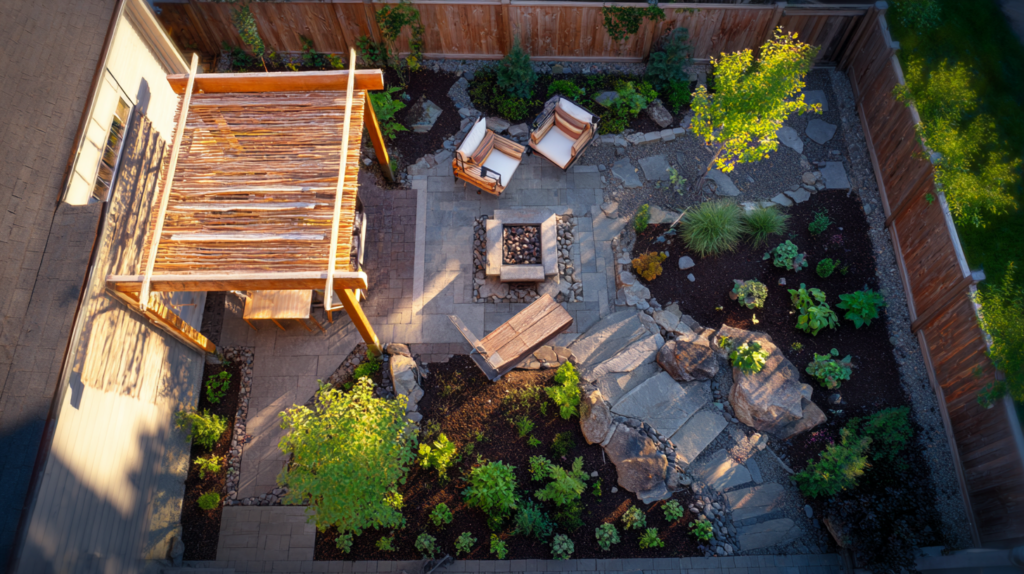
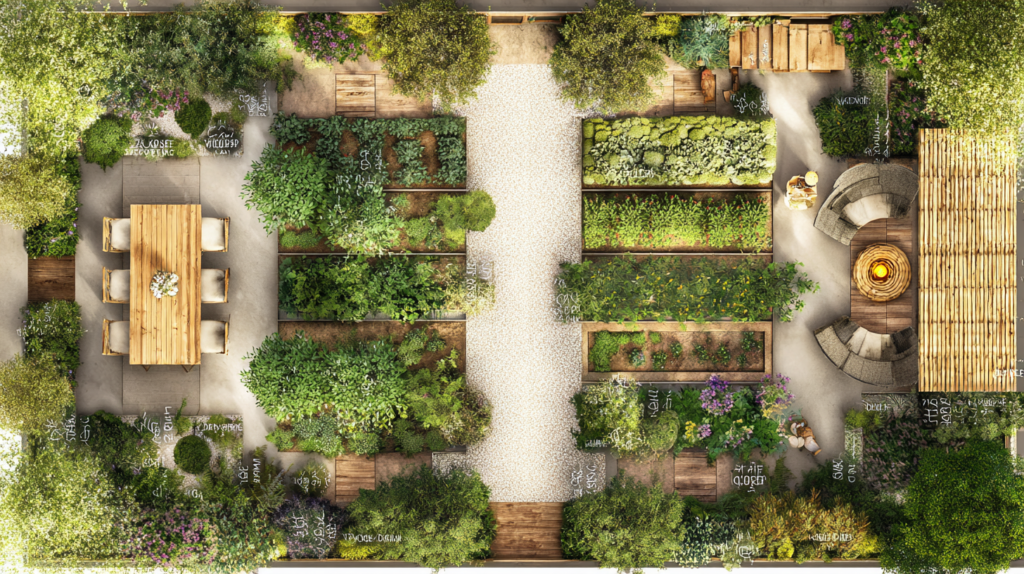
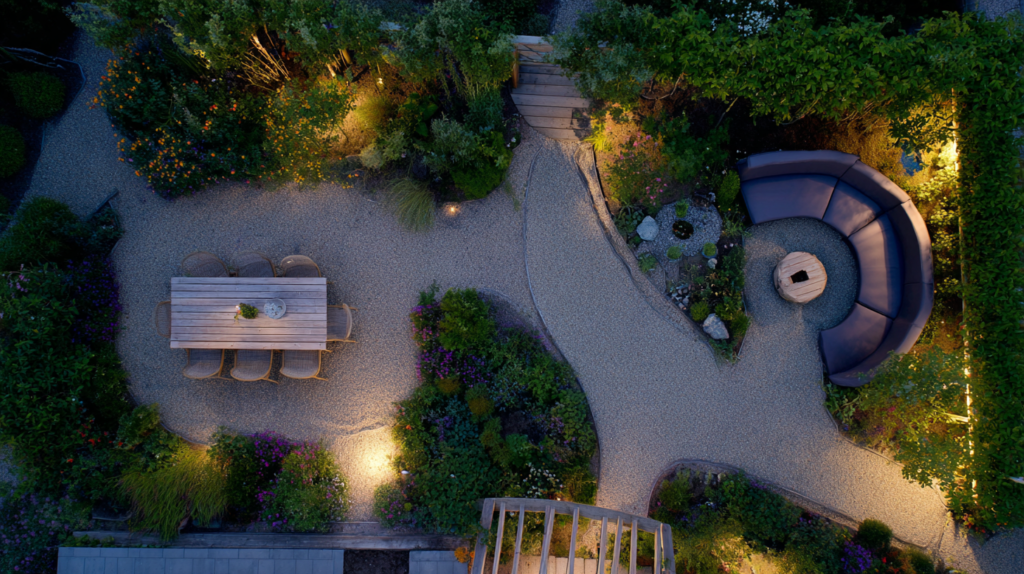
The shift that makes the biggest difference — and that’s defining garden design in 2026 — is thinking about the garden not as a single space but as a collection of outdoor rooms. Instead of one open expanse, a garden that works as well as the best rooms inside your home is divided into distinct zones with defined purposes, separated by natural dividers and connected by considered paths.
In this guide, you’ll find a practical framework for zoning your garden into outdoor rooms that genuinely invite you to use them — covering how to define zones, what furniture and structures create the right boundaries, and how to make the layout work through the full Northern European season, not just summer weekends.
Why the single-space garden stops working
A garden without zones has an invisible problem: it’s hard to begin.
When you walk out into an undivided space, there’s nowhere clearly beckoning you. The lounge furniture is somewhere, the table is somewhere else, and the overall impression is of a large area that needs arranging before it can be enjoyed.
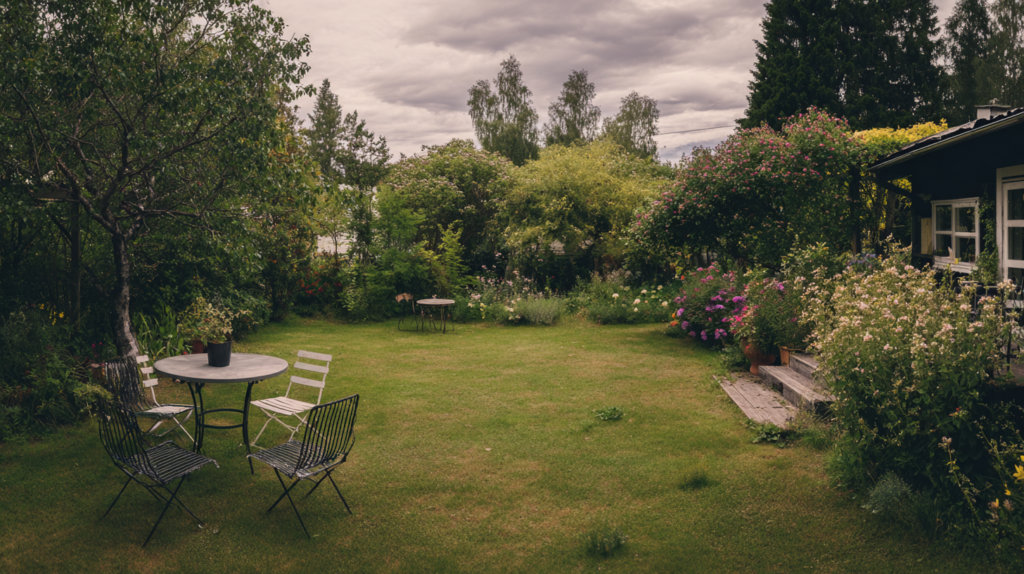
In contrast, a garden with clearly defined zones has destinations. The dining area is a place you walk to. The lounge corner is a place you settle into. Each zone has a clear identity and a clear invitation. That psychological shift — from open field to collection of rooms — fundamentally changes how often and how fully a garden is used.
Houzz’s 2026 landscape research confirmed this shift: homeowners are now approaching gardens as collections of outdoor rooms with defined purposes, separated by natural dividers rather than by fences or hard structures. Furthermore, the gardens people rate highest in satisfaction aren’t the largest ones — they’re the ones where every square metre has a clear role.
The three zones that most gardens need
The dining zone
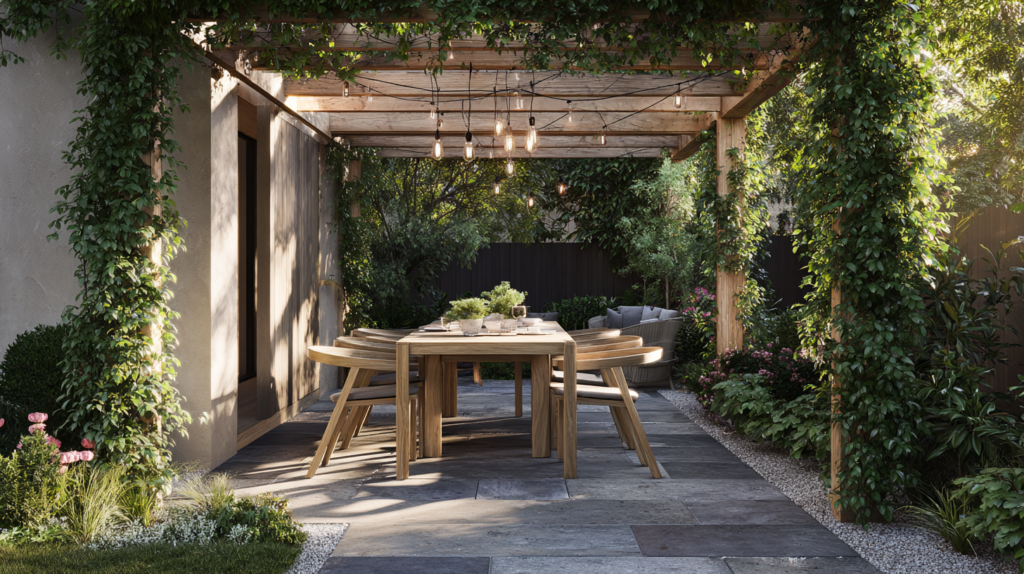
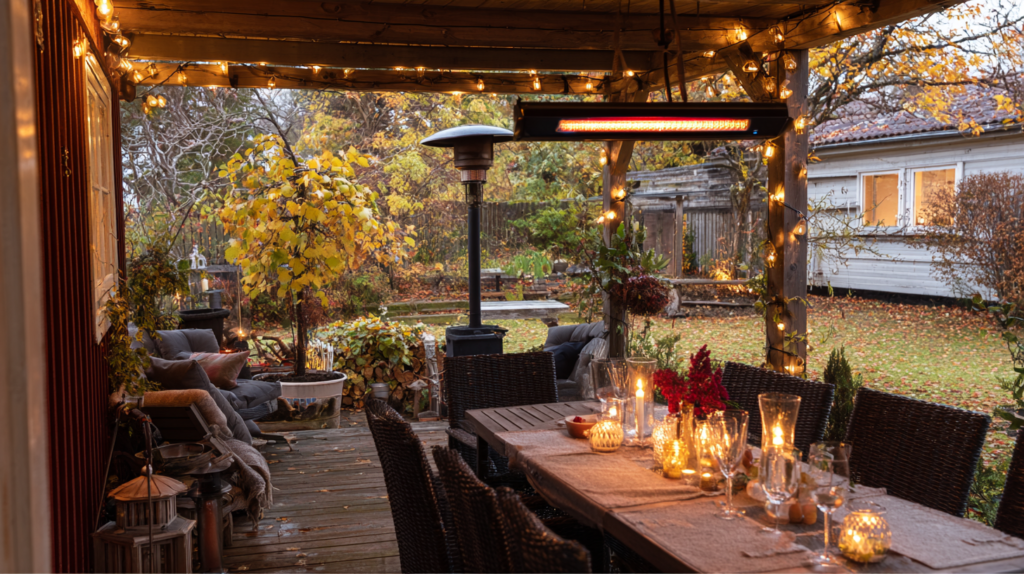
The dining zone is the most important outdoor room in a Baltic climate because it’s where extended outdoor time actually happens. A table and chairs in the open is adequate. A table and chairs under a pergola or a canopy, with some wind protection, is genuinely usable for far more months of the year.
Position the dining zone close to the house — ideally with direct access from the kitchen or the back door. The shorter the journey with food and drinks, the more the zone gets used. However, there should be enough separation to feel like a distinct destination rather than an extension of the kitchen floor. A step down, a change of surface material, or even a dense planting bed on one side creates this separation clearly.
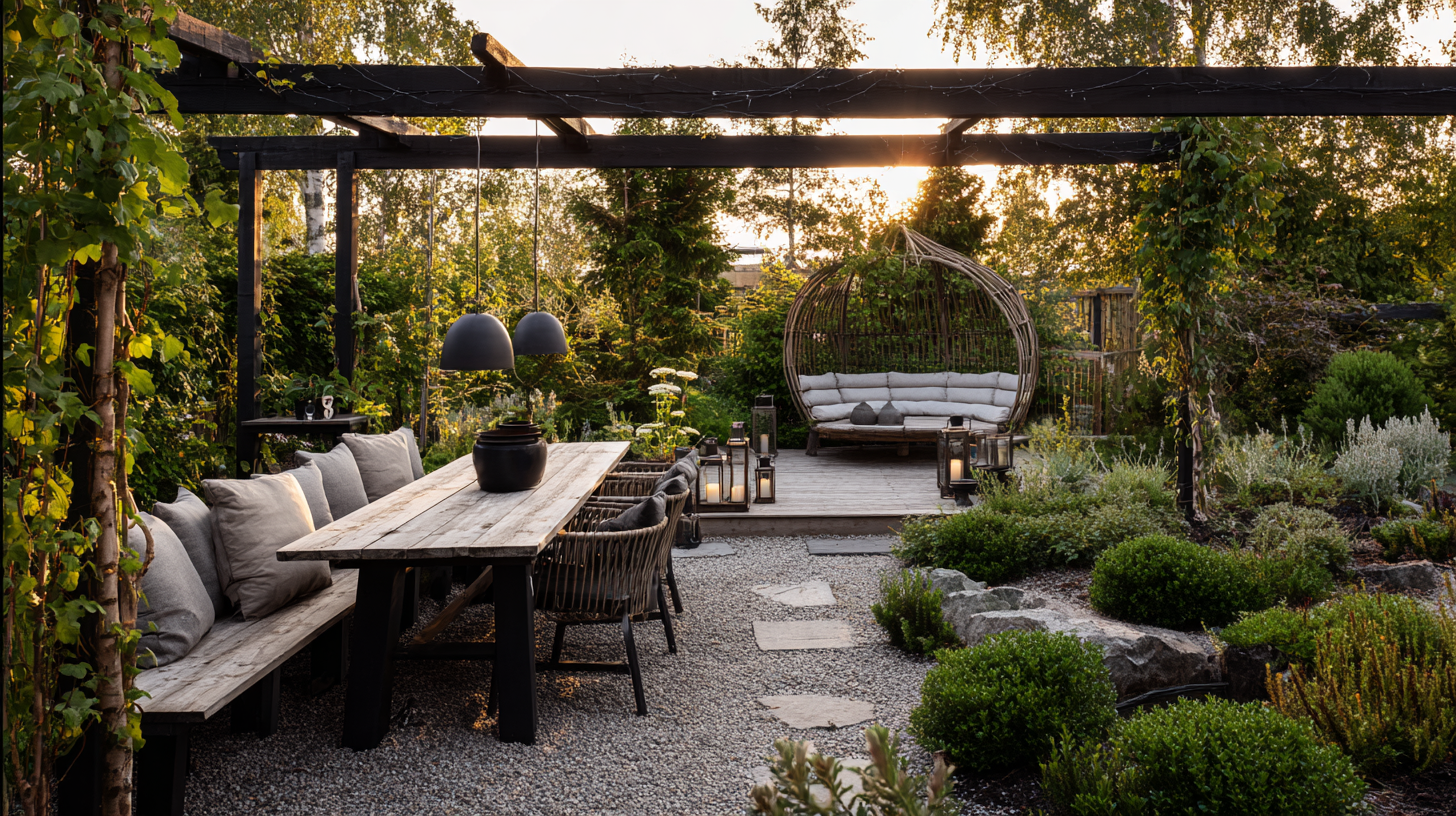
In 2026, the most considered dining zones include an overhead structure of some kind: a pergola with climbing plants, a sail shade, or a more substantial permanent structure. Even a simple pergola changes the character of the dining area from “table outside” to “outdoor dining room”.
The lounge zone
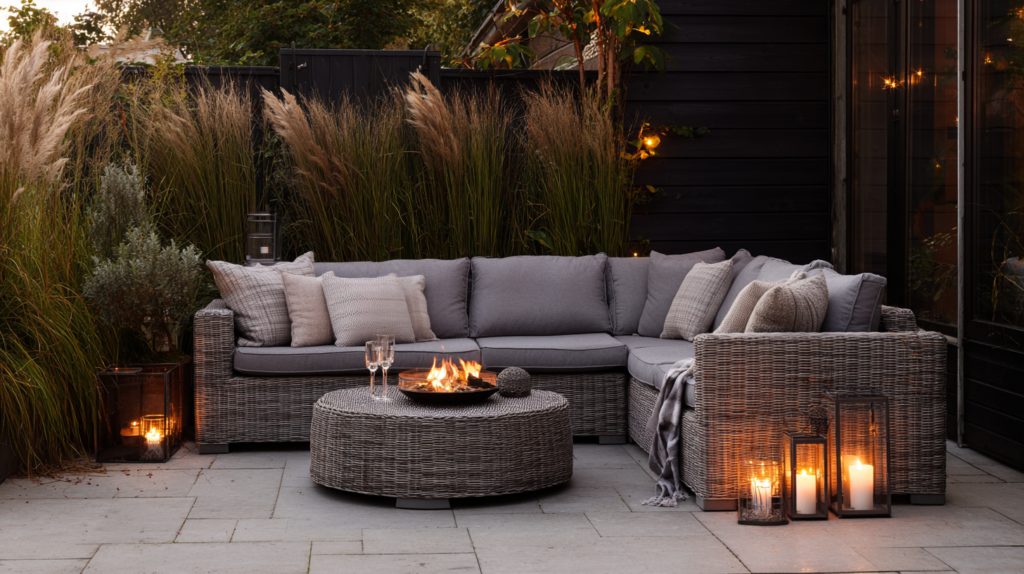
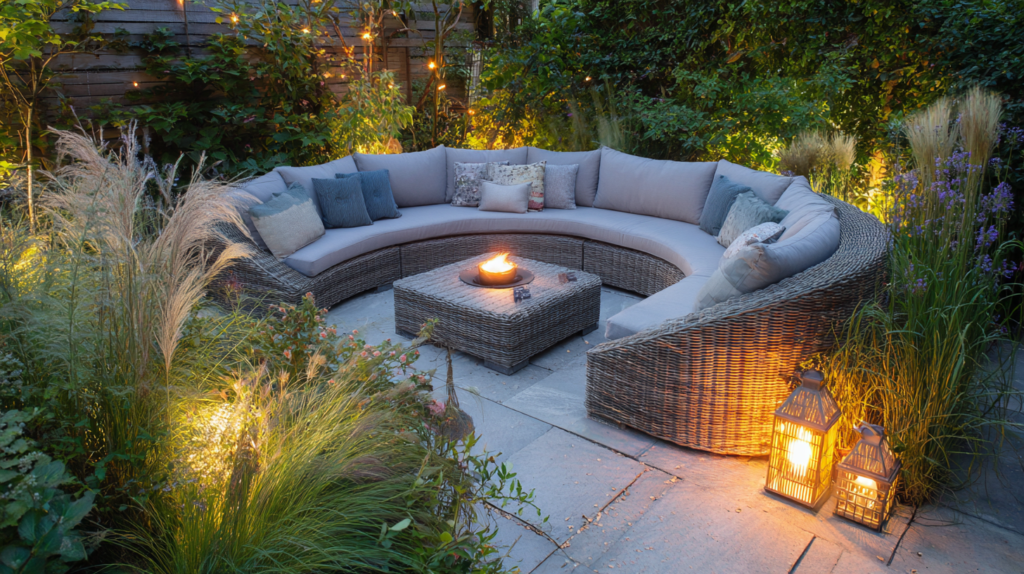
The lounge zone is where the garden becomes a place to genuinely rest rather than just eat or work. In 2026, outdoor lounge furniture is increasingly designed to indoor proportions and comfort levels — deep sectional sofas, weather-resistant upholstery that looks and feels like indoor fabric, low coffee tables with fire bowl features.
This zone works best positioned slightly further from the house than the dining zone — further into the garden, with a sense of arrival. A partial enclosure — a hedge, a planted raised bed, a trellis with climbing plants — creates the cocooning quality that makes a lounge corner feel like a destination rather than just furniture placed outdoors.
The green zone
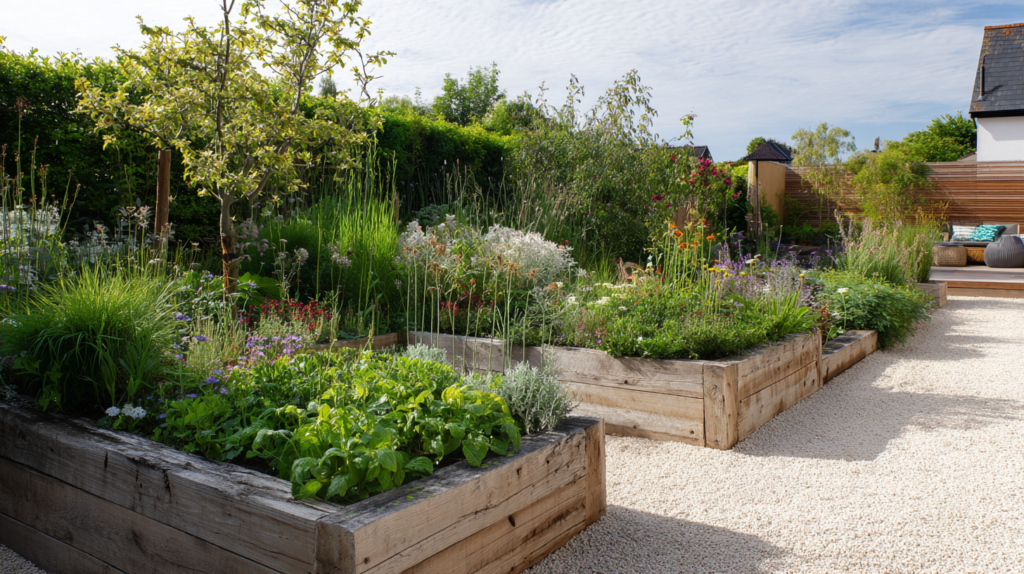
The green zone is everything planted: vegetable beds, flower borders, lawn sections, trees. In 2026, the thinking about green zones has shifted towards using planting actively as the divider between other zones — hedges instead of fences, planted borders instead of paving edges, ornamental grasses instead of hard retaining walls.
This matters because it creates the “garden rooms” quality that the best outdoor spaces have: a sense of moving through enclosed spaces with natural walls, rather than walking across a flat surface divided by furniture alone.
When planning garden zones in a Northern European climate, position your dining zone on the side of the garden with the most shelter from prevailing wind. In Lithuania and across the Baltics, wind is usually the first reason people stop using outdoor spaces in spring and autumn — not temperature. A windbreak — even a dense hedge or a trellis panel — can extend your outdoor dining season by six to eight weeks either side of summer.
Dividers: how to separate zones without building walls
The difference between a garden with zones and a garden with furniture placed at different distances from the house is the quality of the dividers between them.
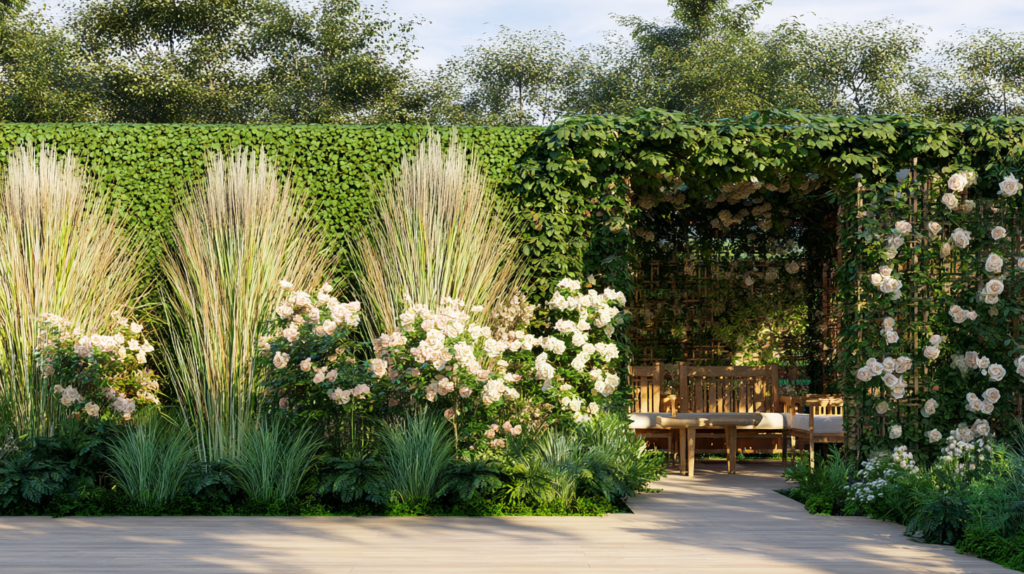
Good dividers create a genuine sense of transition from one space to another. Poor dividers — or no dividers at all — leave zones feeling arbitrary.
The most effective natural dividers in 2026 garden design are: hedges (formal or informal, clipped or natural), ornamental grasses (tall enough to screen at seated height), raised planted beds, pergola structures with climbing plants, and trellises with vertical planting. All of these have the advantage of growing thicker and more effective over time rather than deteriorating.
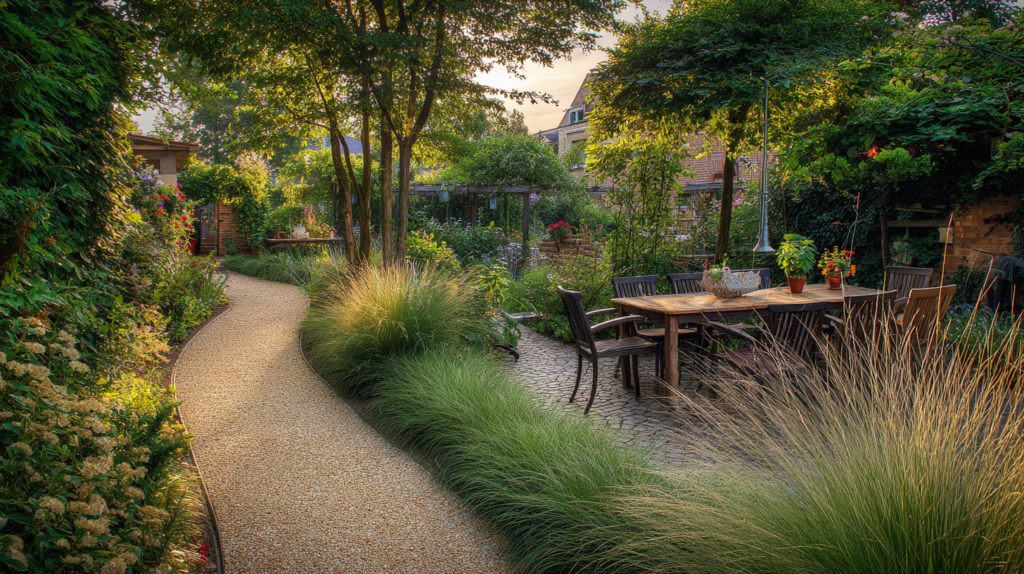
Hard dividers also work well: a step down from one level to another, a change in surface material (from decking to gravel, from paving to lawn), or a low wall. These are typically more expensive and more permanent, which makes them worth doing professionally. However, a simple gravel path with planting on one side costs very little and creates a surprisingly clear transition between zones.
In smaller gardens, less division is better. A garden of 40–60 m² typically needs only two zones — a dining area and a lounge or planted area — before it starts to feel fragmented. The principle is definition, not division: each area should feel like it has a clear identity, not like it’s been walled off from everything else.
Lighting: how to make the garden work after dark
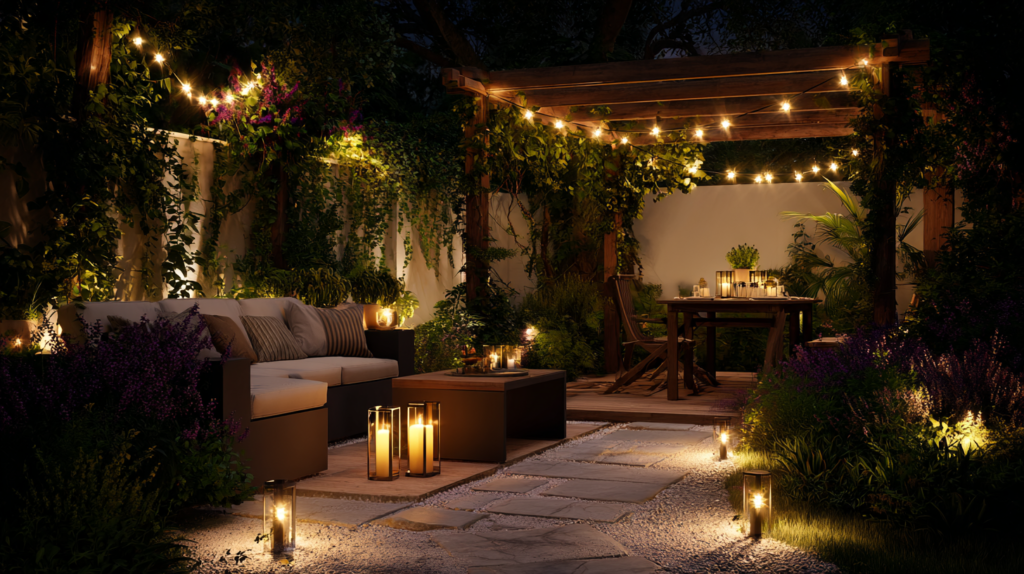
A garden with no outdoor lighting effectively closes when the sun goes down. A garden with well-placed lighting becomes a completely different space after dark — more intimate, more atmospheric, and genuinely usable into the evening.
The most effective outdoor lighting strategy uses three levels. At ground level, pathway markers and low-profile bollard lights define routes and edges without being obtrusive. At mid-height, lanterns placed on tables or beside seating create the warm ambient glow that makes outdoor evenings inviting. At height, string lights between structure points — stretched across a pergola or between posts — define the overhead boundary of each zone and create the most important evening signal: this is a room.
For Baltic gardens, solar LED lighting has improved enormously in quality. Warm-toned solar lights (2700K colour temperature) now deliver genuinely attractive output and require no wiring. They’re worth using for mid-height and ground-level positions. However, for fixed overhead lighting on a pergola or a structural post, a hard-wired circuit delivers more consistent output and the ability to switch zones independently.
The same logic that applies to zoning a garden applies to rooms inside the house. Our guide on why living rooms feel cramped and how to fix them covers the spatial and zoning principles that translate directly to outdoor room design.
🔨 Need a professional for this project?
Hard landscaping — laying paving, building a pergola, installing steps or retaining walls — is the element of garden zoning that most benefits from professional work. A good landscaper also understands drainage, level changes, and which plants create the best natural dividers for your specific garden conditions. Furnero connects you with vetted professionals across Europe.
Making the garden work year-round in a Baltic or northern climate
The most common mistake Baltic homeowners make with outdoor spaces is designing only for summer.
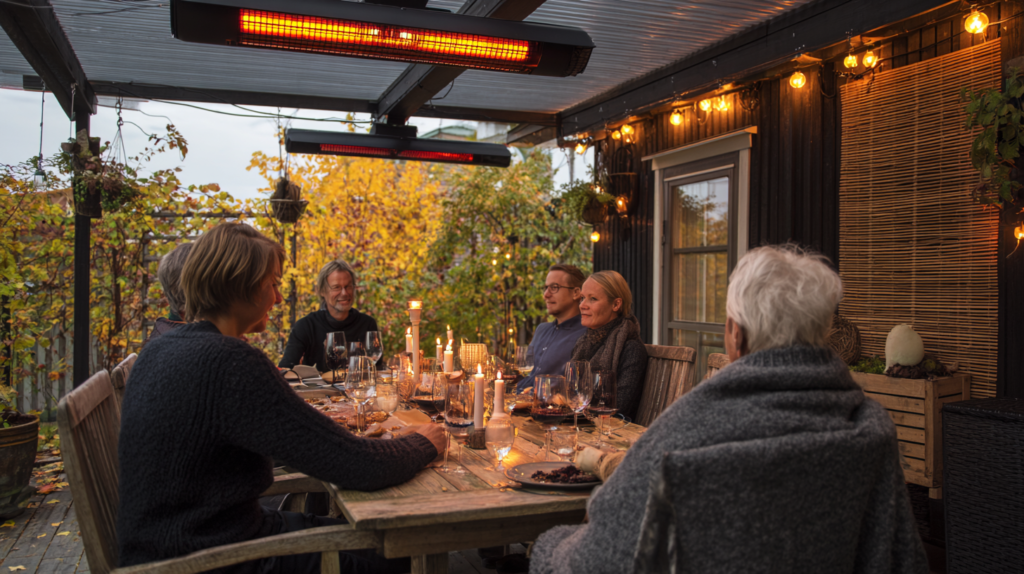
A garden that’s enjoyable for three months and unused for nine is a significant missed opportunity.
However, extending the garden season in Lithuania and across Northern Europe doesn’t require a conservatory or a large budget. Three elements make the biggest difference: a covered structure over the dining zone (pergola with a solid roof section or a waterproof sail shade), a portable or built-in heat source in the lounge zone (fire bowl, electric heater, or a more permanent outdoor fireplace), and windbreaks on the prevailing wind side (dense hedge or a trellis panel with climbing plants).
With these three elements in place, a Baltic garden can realistically be used comfortably from late April through to October — six months of genuine use rather than three. That fundamentally changes the return on any investment made in the outdoor space.
According to Living Etc’s garden trends and outdoor living research, the outdoor spaces that get used most consistently are those treated as extensions of the interior — with the same quality of furniture, lighting, and zoning that would be applied to a room inside the house.
When it comes to hiring the professionals to build those structures, our contractor vetting guide — 5 questions to ask before hiring a contractor — applies directly to landscapers and garden room builders as much as it does to kitchen fitters.
The garden that invites you in every day
A well-zoned garden does something simple but profound: it creates destinations.
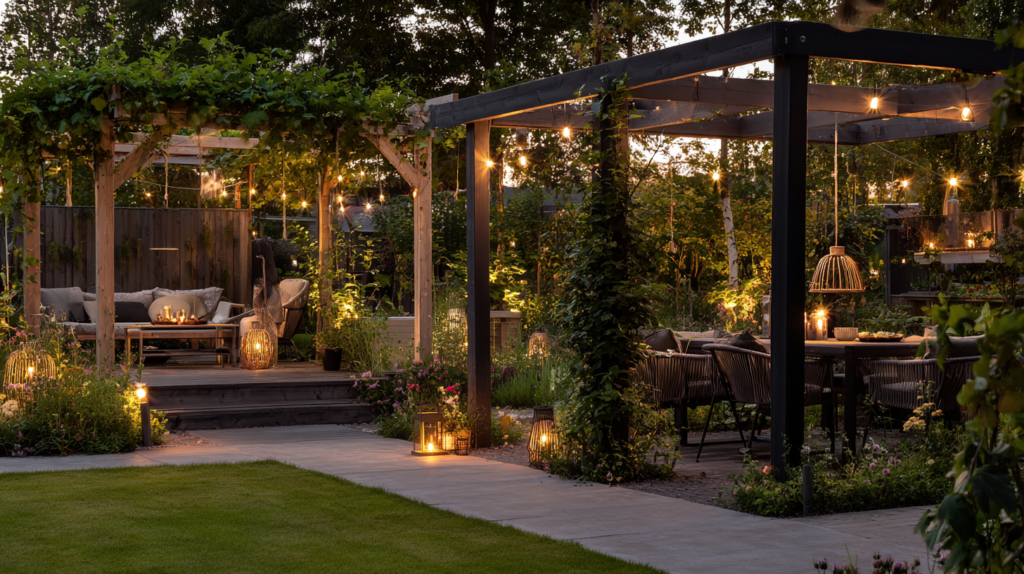
You don’t walk out into a garden with zones hoping to find somewhere to sit — you walk out knowing exactly where you’re going, and the zone welcomes you in.
The gardens that get used most often, and that homeowners feel most attached to, are not the largest or the most expensive. They’re the ones where every area has a clear identity, where the transitions between zones feel natural, and where the lighting and structure allow the space to be used comfortably beyond the handful of perfect summer evenings.
In short, the question to ask of any garden is not “what does it look like from above?” but “where do I want to be in it?” If the answer is clear and immediate — the dining table under the pergola, the lounge corner by the fire bowl — the garden is doing its job.
✅ Key Takeaways
- Think of your garden as a collection of outdoor rooms with distinct identities, not a single open space.
- Most gardens need three zones: a dining zone, a lounge zone, and a green/planted zone.
- Natural dividers — hedges, ornamental grasses, raised beds — create the garden rooms effect without hard walls.
- Position the dining zone close to the house and with wind shelter on the prevailing wind side.
- Three-level outdoor lighting (ground, mid-height, overhead) extends garden use into evenings year-round.
- A covered dining zone, a heat source, and wind protection extends the Baltic garden season by up to three months.
Ready to design a garden that gets used every month, not just in July?
Furnero connects homeowners with vetted landscapers and garden designers across Europe.