
Category: Garage/Utility Room · #Cost-Guide
💰 Cost: €1,500–€25,000 depending on conversion type and finish · 🔧 Difficulty: Complex — insulation, electrics and flooring require professional help
There’s a room in most homes that’s larger than the home office, quieter than the living room, and structurally already separated from the rest of the house. Most people use it to store things they haven’t thought about in three years, and occasionally to park a car. However, the garage is one of the best-positioned rooms in any home for a complete transformation — and it’s also the one renovation most homeowners never seriously consider.
Garage conversions are the fastest-growing category of home renovation in Europe right now. The reason is simple: unlike a home extension, a garage conversion doesn’t require new foundations, new walls, or an extended roofline. The structure is already there. The floor space is yours. The only question is what to put in it. And that’s where the decisions get interesting — because a garage conversion can become almost anything, from a professional-standard home gym to a guest suite that rivals a boutique hotel room.
This guide covers the six most popular garage conversion types, what each one realistically costs, what structural work needs to happen before any of them are possible, and how to decide which option makes the most sense for your household. Because the right garage conversion isn’t just about adding a room — it’s about adding the specific room your household actually needs most.
- What needs to happen before the conversion starts
- Electrics
- The 6 most popular garage conversions — and what each one costs
- The garage door: your most important design decision
- How to decide which conversion is right for you
- What a garage conversion adds to your home's value
- The real test: what would you do with your garage if you started from scratch today?
What needs to happen before the conversion starts
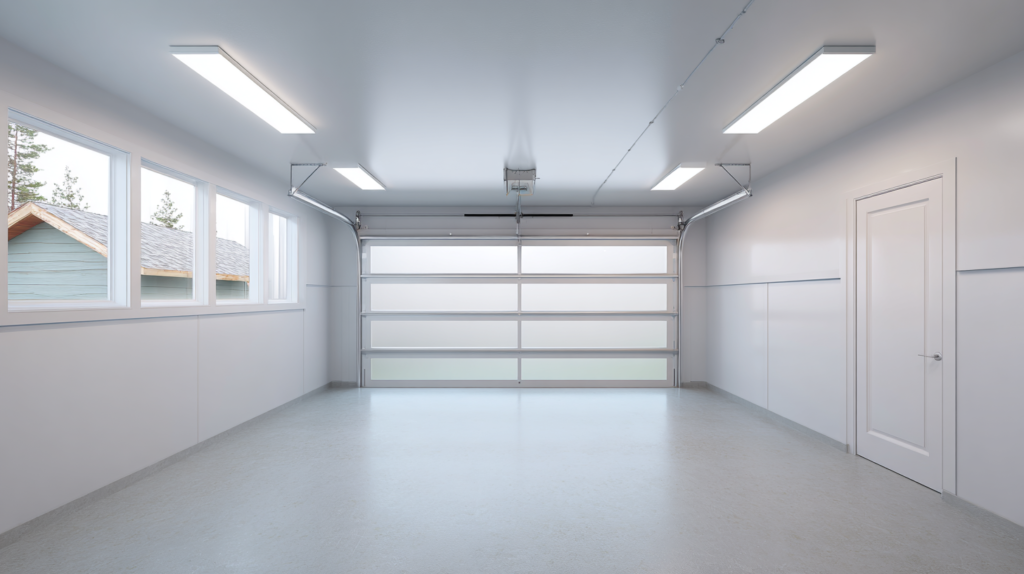
Before any garage conversion can begin, four things need to be addressed. These aren’t optional — they’re the difference between a room that works all year and one that’s cold in winter, damp in summer, and costs you money every month in wasted heating.
Insulation
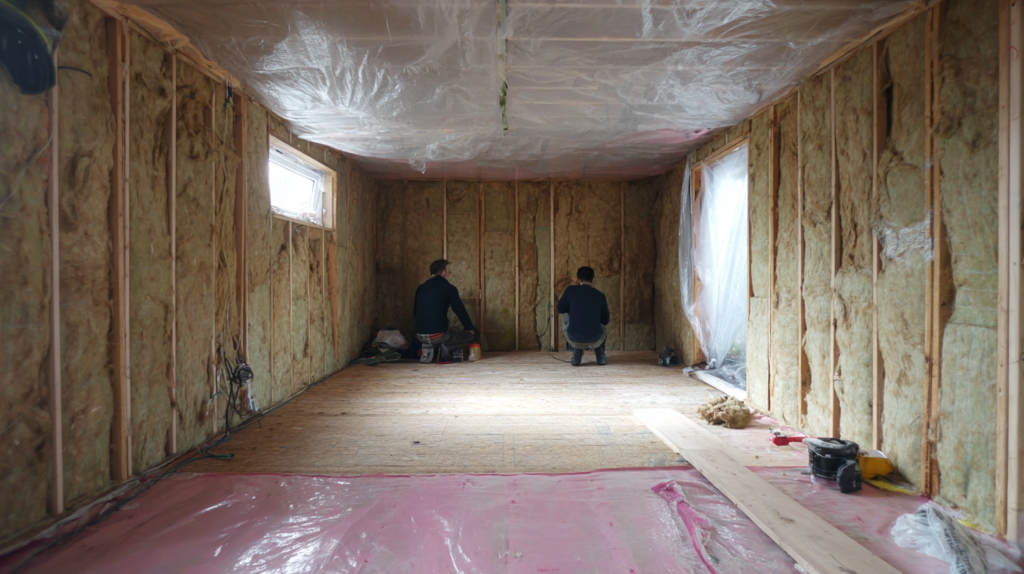
A standard garage has almost no thermal insulation. The walls, ceiling, and floor are typically single-skin concrete or blockwork, which means the space loses heat rapidly and gains it just as fast in summer. Before any garage conversion is usable year-round, the walls need insulating (either internally with mineral wool batts and plasterboard, or externally where planning allows), the ceiling needs a vapour barrier and insulation above it, and the floor needs either a floating floor system or screed over underfloor insulation. Furthermore, the garage door opening — whether you replace it with a wall, glazing, or a new insulated door — is the largest single source of heat loss and needs proper treatment.
Electrics
A garage typically has a single consumer unit spur with one or two circuits. Most garage conversions require a full rewire of the space with a proper distribution board, multiple power circuits, a dedicated lighting circuit, and in many cases a heat pump or electric heating circuit. This must be done by a qualified electrician and, in most European countries, requires a completion certificate.
Damp proofing
Garages are often built without the damp-proof course that separates the slab from the walls in a habitable room. Before any floor or wall finishes are applied, a specialist damp survey and treatment is worth the investment. A garage conversion that develops rising damp eighteen months after completion is expensive to fix and deeply frustrating.
Ventilation
A closed, insulated room with people in it generates humidity that needs to go somewhere. Therefore, most garage conversions require at least one trickle vent, and ideally a mechanical ventilation system. The type depends on the use: a home gym needs more ventilation than a guest bedroom; a utility room with a washing machine needs the most of all.
These four elements typically cost between €2,000 and €8,000 depending on garage size and specification. They’re not exciting — but they’re the foundations that every successful garage conversion is built on.
The 6 most popular garage conversions — and what each one costs
Once the structural basics are in place, the conversion direction is largely a design and equipment question. Here are the six formats that homeowners across Europe are choosing most in 2026.
1. Home gym
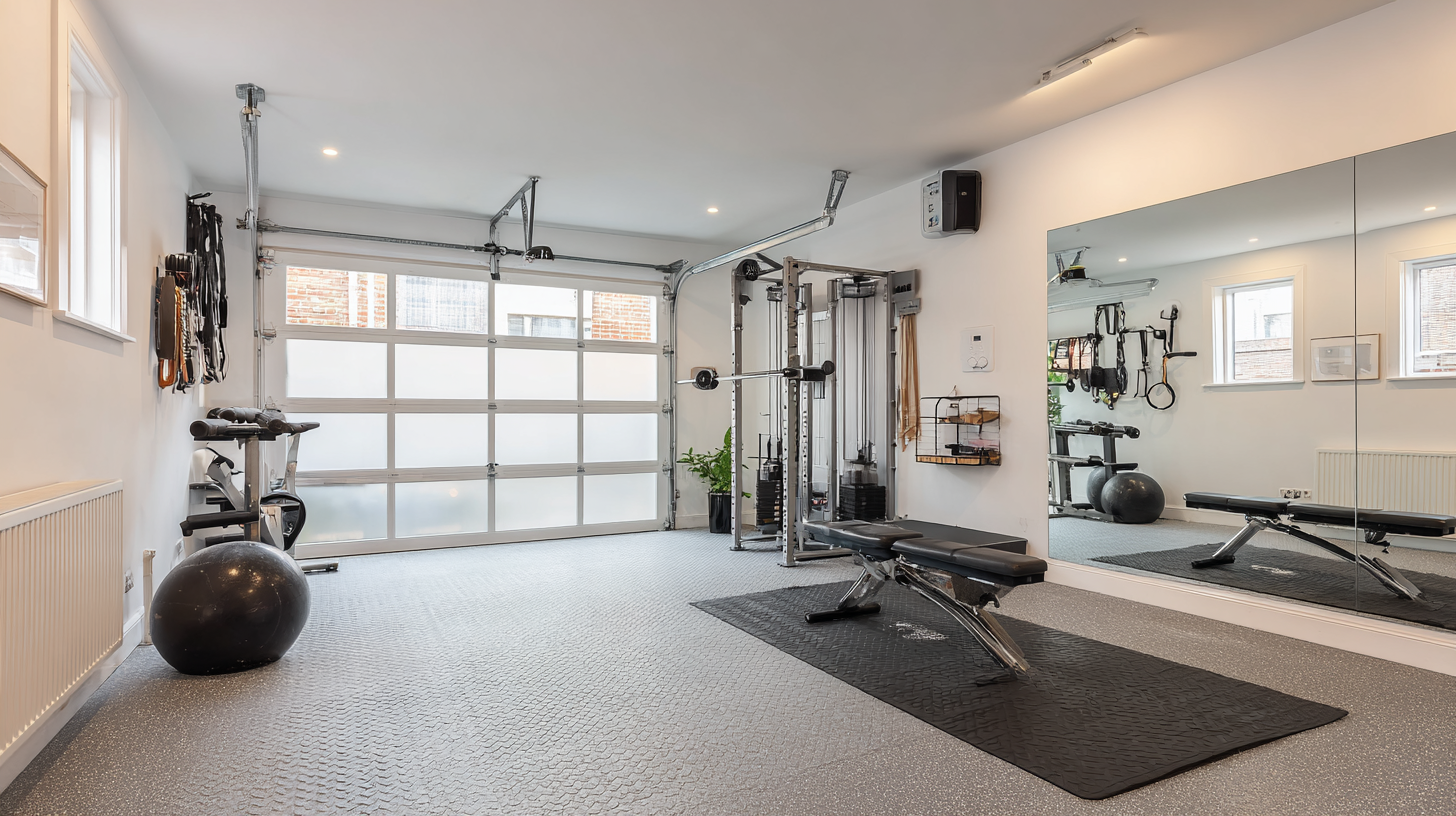
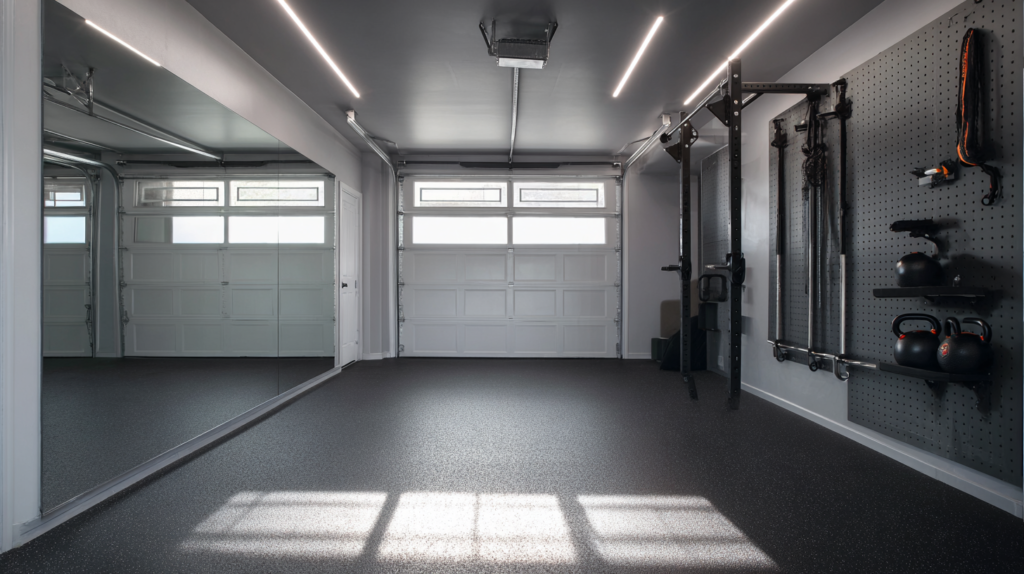
The most popular garage conversion for a reason: a gym is one of the few room types that actively benefits from a concrete slab floor, generous ceiling height, and separation from the living area. Because gym equipment generates noise and vibration, the garage — already acoustically separated from the house — is the ideal location.
A basic home gym conversion (rubber flooring, mirrored wall, good lighting, electrical upgrades) typically costs between €2,500 and €6,000 for the construction work, plus the cost of equipment. For most households, this pays back against gym membership within three to four years, and it’s available at 6 am without a commute.
2. Home office / studio
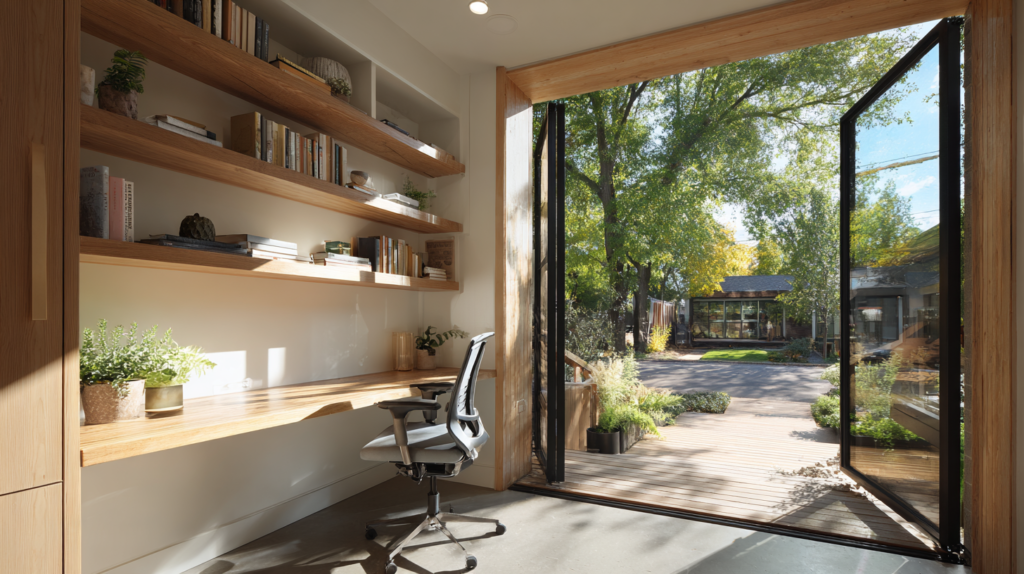
For households that need a genuine home office — with a door, proper acoustics, and a professional background for video calls — a garage conversion is significantly better than any desk pushed into a bedroom corner. The conversion is also relatively straightforward because a home office has modest demands: a power circuit, internet connectivity, lighting, and heating.
Cost for a garage office conversion is typically €3,000 to €9,000 including insulation, plasterboard, flooring, lighting and a new glazed front panel. In fact, many homeowners report the productivity improvement alone justifies the cost within the first year.
3. Guest suite
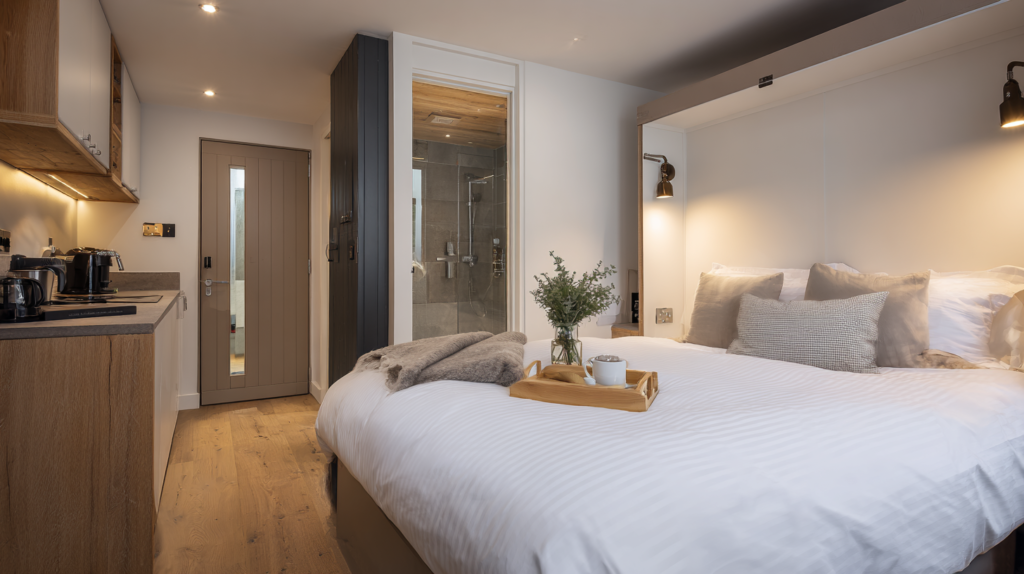
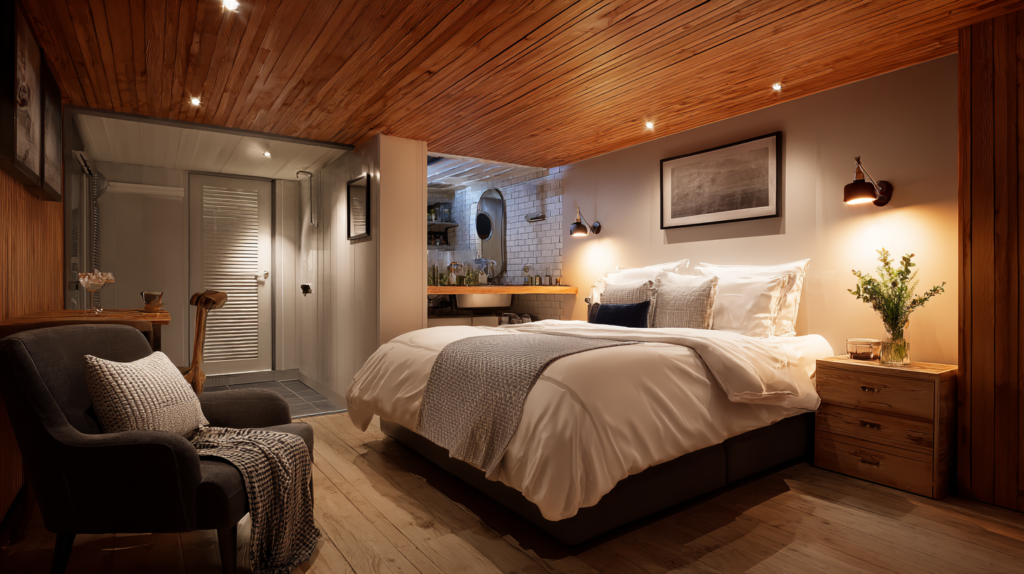
A garage converted to a self-contained guest suite — with its own bathroom, a proper bed, and a small sitting area — is the most complex conversion but also the most versatile. Done well, it can serve as guest accommodation, an AirBnb rental, or eventually a space for an older family member to live semi-independently.
A full guest suite conversion with en-suite bathroom typically costs €8,000 to €20,000 depending on finish. However, the potential rental income from even occasional AirBnb use means many homeowners recover this cost within two to four years.
4. Utility room / mudroom
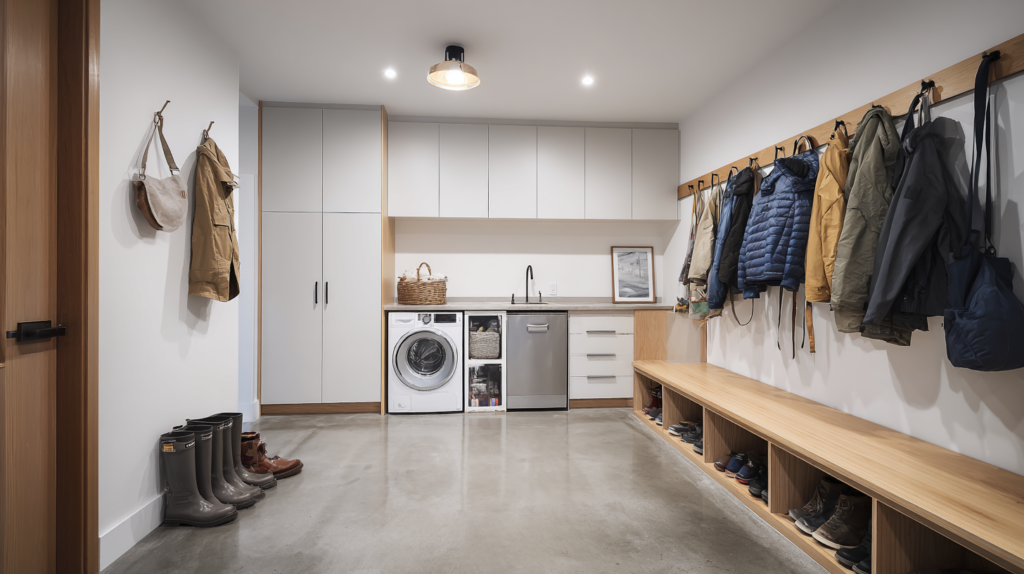
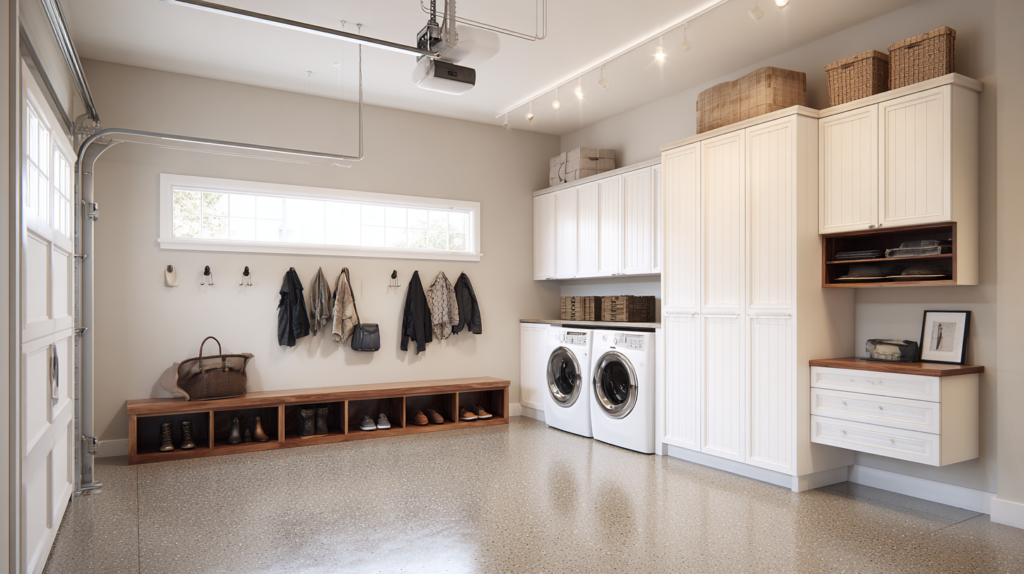
For families, converting a garage into a proper utility room and mudroom is one of the most practical upgrades possible. A space with a washing machine, a dryer, a utility sink, coat hooks, a boot bench, and bike storage transforms the daily chaos of family life. Furthermore, it removes the messy transitional zone from the entrance to the living area — a quiet revolution in how the whole house feels.
Cost for a utility and mudroom conversion: €2,000 to €6,000 for basic built-in storage, appliance connections and a utility sink. This is often the most cost-effective garage conversion because the functional gain is enormous relative to the investment.
5. Creative studio / workshop
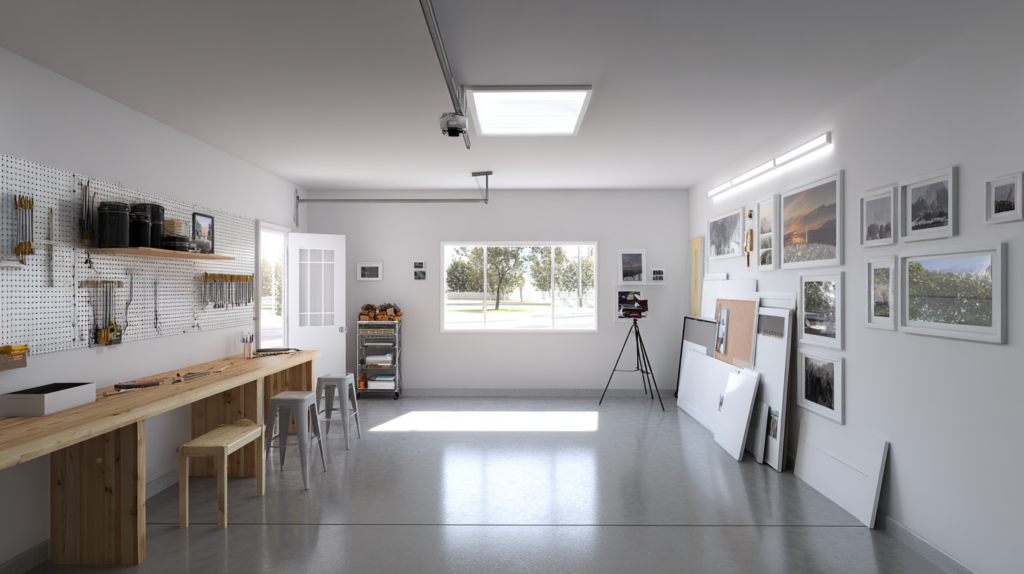
For homeowners who do serious hobby work — woodworking, ceramics, photography, painting — a garage studio provides the space, mess-tolerance and ventilation that no interior room can offer. Good overhead lighting, a robust floor finish, and proper electrical capacity are the main requirements. Also important: a sink, a proper ventilation extract, and storage for materials.
Cost: €2,500 to €7,000 depending on the specialisation. A photography studio has different requirements from a woodworking shop — both have very different requirements from a pottery studio.
6. Playroom / family room
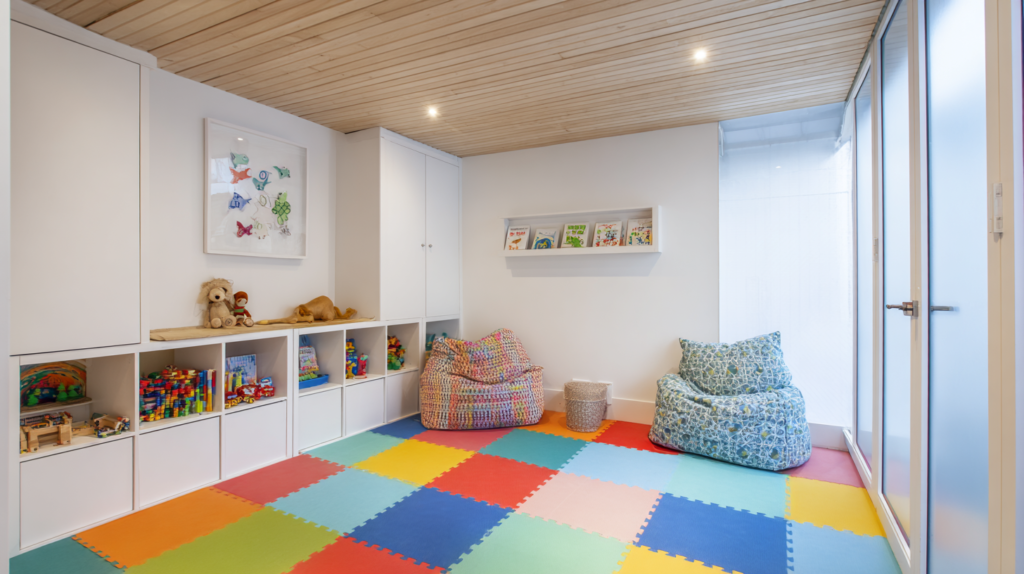
For families with young children, a dedicated playroom is one of the most transformative changes possible to daily life — because it removes the toys from the living room and gives children a space that is genuinely theirs. A garage playroom is easily repurposed as children grow, making it one of the most adaptable conversion options over time.
Cost: €2,000 to €5,000 for insulation, flooring (typically rubber or vinyl), good lighting and a painted or panelled wall finish.
The most common garage conversion mistake is skipping the insulation or doing it inadequately to save money upfront. An under-insulated conversion will be cold in winter, hot in summer, and cost more in heating than a properly insulated one every single year it exists. The insulation investment pays back continuously. The money saved by skipping it costs you continuously.
The garage door: your most important design decision
What happens to the garage door opening is the decision that most shapes how the converted room looks, feels, and functions. Because the opening is typically 2.4 to 3 metres wide and 2 metres tall, it’s the largest aperture in the room — and how it’s treated determines the amount of natural light, the connection to the outside, and the visual character of the space.
There are four main options:
Replace with a solid wall
This gives the maximum thermal performance and the most flexibility for interior finishes. However, it also removes all natural light from that facade. Only choose this option if the garage has windows on other walls, or if the conversion doesn’t benefit from natural light (a utility room, a workshop with controlled lighting, a home cinema).
Replace with full or partial glazing
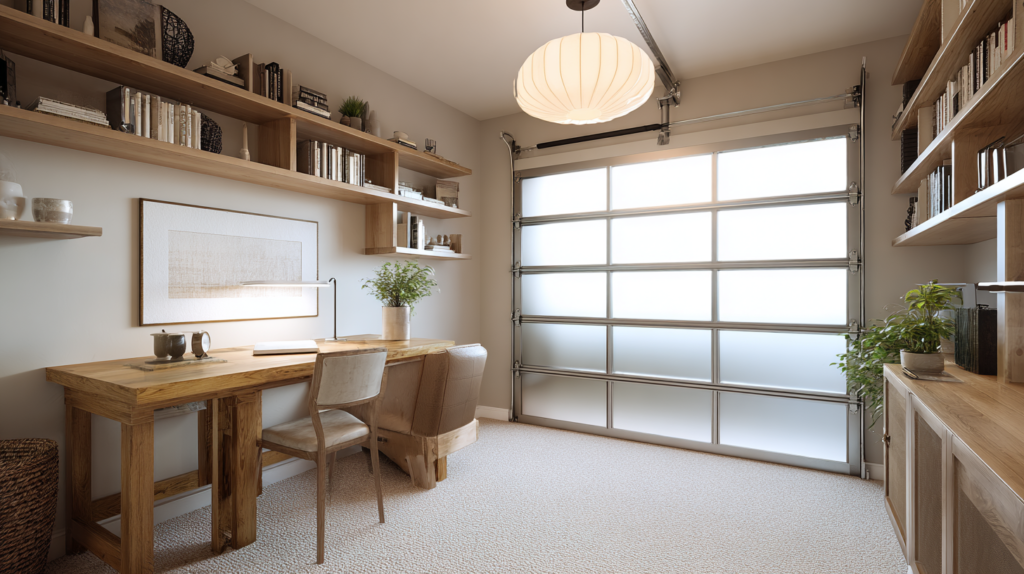
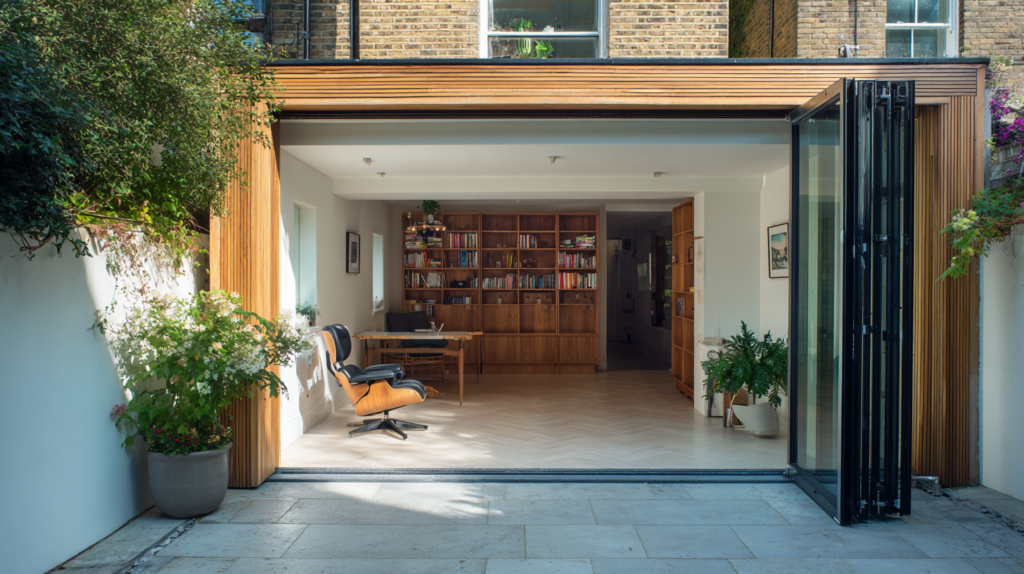
A frameless glass panel or a large glazed door system is the most popular choice for home offices, guest suites, and studios. It floods the space with natural light, creates a strong visual connection to the outside, and makes the room feel significantly larger. Frosted or etched glass provides privacy while maintaining light transmission. Furthermore, a sliding or bifold glazed panel can open the garage completely to a terrace or garden in warmer months.
Install a well-insulated sectional door
If you still need to occasionally use the space as a garage — for bike storage, for seasonal items — a highly insulated sectional door with small glazed panels gives both access and light. Modern insulated garage doors have thermal performance comparable to a well-specified exterior door.
Retain and reface the existing door
In some cases, an existing up-and-over garage door can be insulated from the inside and reused. This is the lowest-cost option but typically gives the worst thermal and aesthetic result. It’s only worth considering if the budget is very tight and the conversion use doesn’t require good insulation.
How to decide which conversion is right for you
With six options on the table, the right choice depends on answering three questions honestly.
What does your household most need?
Not what would be nice to have — what is actively missing from your daily life? If you drive to a gym every morning, a home gym removes that friction. If you work from the dining table or a bedroom desk, a home office changes your working life. If you have young children and the living room is buried under toys, a playroom is transformative. The best garage conversion solves the problem that’s actually costing you time, money or comfort right now.
What will the space support?
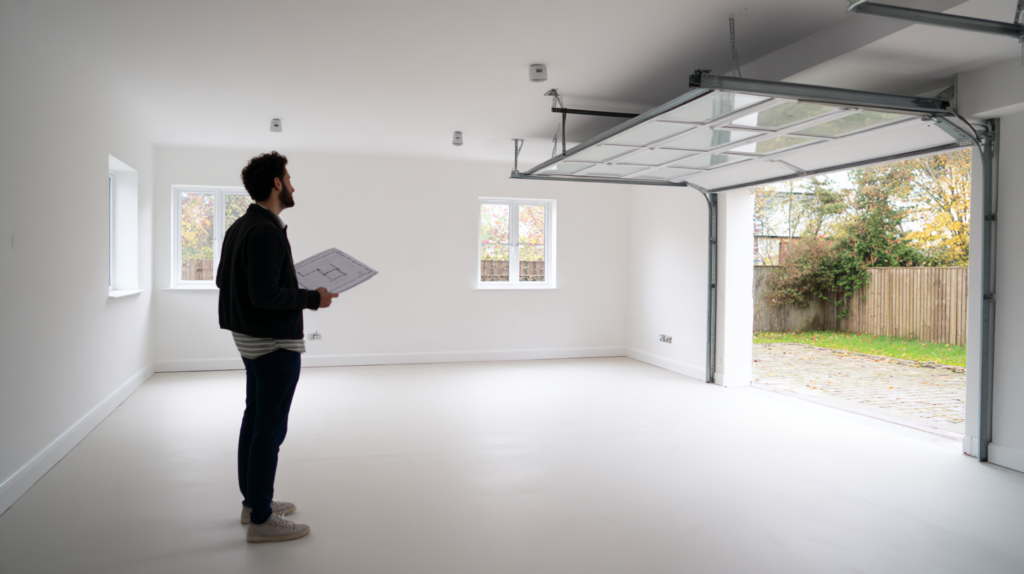
A long narrow garage suits a home office or workshop better than a square one. A garage with an existing door to the garden is ideal for a guest suite or playroom. A garage with plumbing already nearby — next to the kitchen or bathroom — makes an en-suite guest suite or utility room significantly cheaper.
What’s your planning situation?
In most European countries, converting an existing attached garage to a habitable room is permitted development — no formal planning permission required. However, if the garage is detached, if you’re changing the external appearance significantly, or if you live in a protected area, permitted development rights may not apply. Therefore, checking with your local authority before starting work is always worthwhile.
Find more garage conversion ideas at Houzz.
🔨 Need a professional for this project?
A garage conversion involves insulation, structural changes, electrics and potentially plumbing — the kind of project where the right contractor makes a significant difference to the result and to the cost of living in it for the next twenty years. Furnero is building a vetted directory of builders and renovation professionals across Europe who specialise in exactly this kind of project.
What a garage conversion adds to your home’s value
A garage conversion is one of the few renovation types with consistent, measurable resale value. Because it adds a genuine habitable room to the property — as opposed to a cosmetic upgrade that only improves appearance — it changes how the home is categorised and valued by buyers.
Industry data from the UK and wider European property markets consistently shows that a quality garage conversion recovers between 70% and 90% of its cost at resale, and in high-demand urban and suburban markets, can add more value than it costs to build. The key word is quality. A poorly insulated conversion with cheap finishes will be spotted and discounted by buyers. A properly built conversion — with completion certificates for electrics and building work, good insulation values, and a finish consistent with the rest of the house — is treated as a genuine additional room.
For rental purposes, the calculation is even more direct. A garage converted to a self-contained AirBnb guest suite, for instance, can generate €3,000 to €8,000 per year in some markets — meaning the construction cost is recovered in two to four years. Furthermore, a garage that becomes a utility room removes the need for a utility room elsewhere in the house, freeing up interior space that has its own value.
The real test: what would you do with your garage if you started from scratch today?
Most people inherit their garage’s current use by default. It became storage because that was the path of least resistance. However, if you were designing your home from a blank plan today — knowing how you actually live, what your household actually needs, and what your floor plan actually contains — would you choose to dedicate those 20 or 30 square metres to overflow storage?
Probably not. And that’s the thought experiment worth sitting with. Because a garage conversion, unlike most major renovations, works with a structure that already exists. There’s no foundation to dig. No walls to build. No roof to add. The bones are there — and so is the floor space. The only thing standing between you and a room your household genuinely uses every day is a decision about what that room should be, and the quality of the work that builds it.
That decision is worth making carefully. In fact, taking the time to understand what your household is actually missing — not what would be nice, but what’s genuinely needed — is the most important part of any garage conversion project. Get that right, and the rest follows naturally.
✅ Key Takeaways
- A garage conversion adds a habitable room without new foundations, walls or a roof — the structure is already there, which is why it’s one of the best-value renovations available.
- Before any conversion is liveable, four things must be addressed: insulation, electrics, damp proofing and ventilation. Skipping any of these creates problems that are expensive to fix later.
- The six most popular garage conversions in 2026 are: home gym, home office, guest suite, utility/mudroom, creative studio, and playroom/family room. Each has a different cost range and set of structural requirements.
- The garage door opening is the most important design decision in any conversion — glazing it creates a room flooded with natural light; closing it with a solid wall maximises thermal performance.
- A quality garage conversion recovers 70–90% of its cost at resale and can recover its full cost within two to four years if used for rental.
- The right conversion is the one that solves the problem your household actually has — not the one that sounds most impressive, but the one that changes daily life most meaningfully.
Thinking about converting your garage?
Furnero connects homeowners with vetted builders and renovation professionals across Europe who understand how to deliver a garage conversion that adds genuine value to how you live.