Category: Kids Room · #Design-Guide
💰 Cost: €200–€1,500 depending on furniture choices · 🔧 Difficulty: Moderate — most families can do this without a contractor
You buy the cute cloud wallpaper. You get the little bed shaped like a race car. Your four-year-old is thrilled — and honestly, so are you. Then two years pass, and the whole kids room feels like a time capsule from a phase your child has completely outgrown. Most parents design a kids room for the child they have right now. However, the room you build today will need to work for the next eight or ten years — through every new obsession, every growth spurt, every shift from playing on the floor to needing a proper desk.
The real problem isn’t budget or even taste. It’s that most kids room designs are too specific. A themed room solves one moment perfectly and nothing else well. Because the furniture, colours and layout are all tied to a single age or interest, the whole thing feels wrong sooner than anyone expects. And so the cycle starts again — new furniture, new paint, new cost.
This kids room guide is built around one idea: design for flexibility first, personality second. That doesn’t mean a cold or generic room. In fact, the most beautiful kids rooms in 2026 are also the most adaptable — layered, warm, nature-inspired, and built around furniture that quietly evolves as your child does. Here’s how to do it.
- The problem with designing a kids room around right now
- The furniture that genuinely grows with your child
- How to zone a kids room properly
- The sleep zone
- The play zone
- The study zone
- Colour palettes that don't expire
- Storage that actually works long-term
- The real test: would you still love this kids room in five years?
The problem with designing a kids room around right now
Most kids room redesigns happen for the same reason: the room was built for a specific moment. A toddler’s nursery gets repainted for a school-age child. A school-age room gets reworked for a teenager. Each time, there’s cost, disruption, and a pile of furniture that no longer fits.
However, there’s a pattern among families who don’t fall into this cycle. They design for ranges, not moments. Instead of a bed that looks like a racing car, they choose a low platform bed in natural wood — something that looks just as good to a nine-year-old as to a three-year-old. Instead of cartoon wallpaper, they paint the walls in a warm earthy tone and let personality come through in swappable elements: a poster, a shelf of curated objects, a rug that can be changed for under €80.
The distinction matters because most kids room furniture is an investment. A solid wood bed or a well-built storage unit lasts ten to fifteen years. A themed item lasts, on average, two. Designing for longevity isn’t about removing joy from the room — it’s about putting joy in the right places.
The furniture that genuinely grows with your child
The single most important kids room decision is the bed. Because it anchors the whole room, it also sets the tone for everything around it. And it’s the one piece that will stay in the room the longest.
For a room that adapts well, consider these formats:
Low platform beds with storage drawers underneath
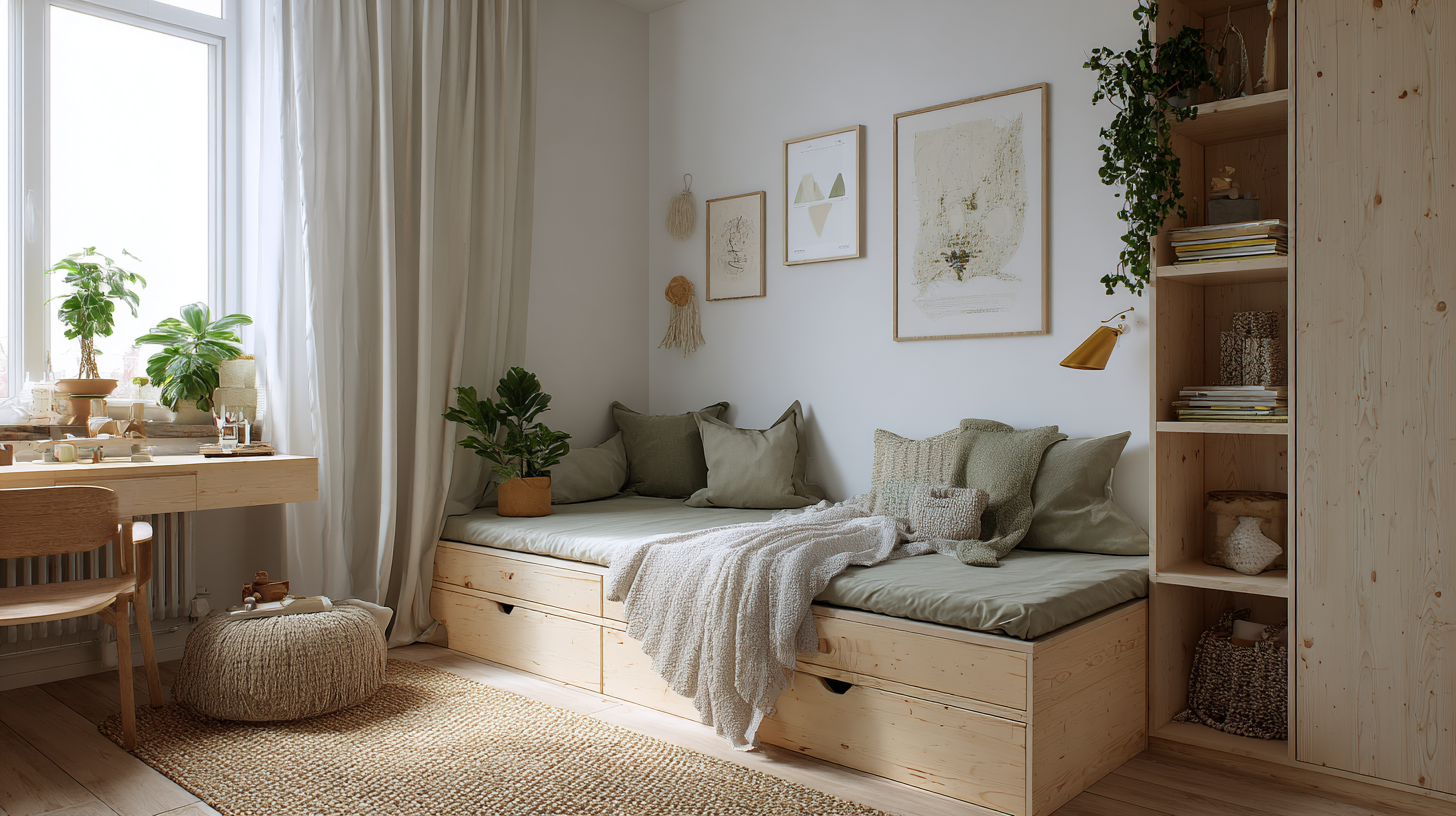
These work from toddler age onwards because the floor-level height is safe and accessible. The built-in drawer storage underneath means you don’t need a separate chest of drawers, which is always the first thing that stops fitting as the child grows. Natural wood finishes — oak, pine, beech — age well and don’t read as “children’s furniture” by the time your child is ten.
Bunk beds with integrated desk space
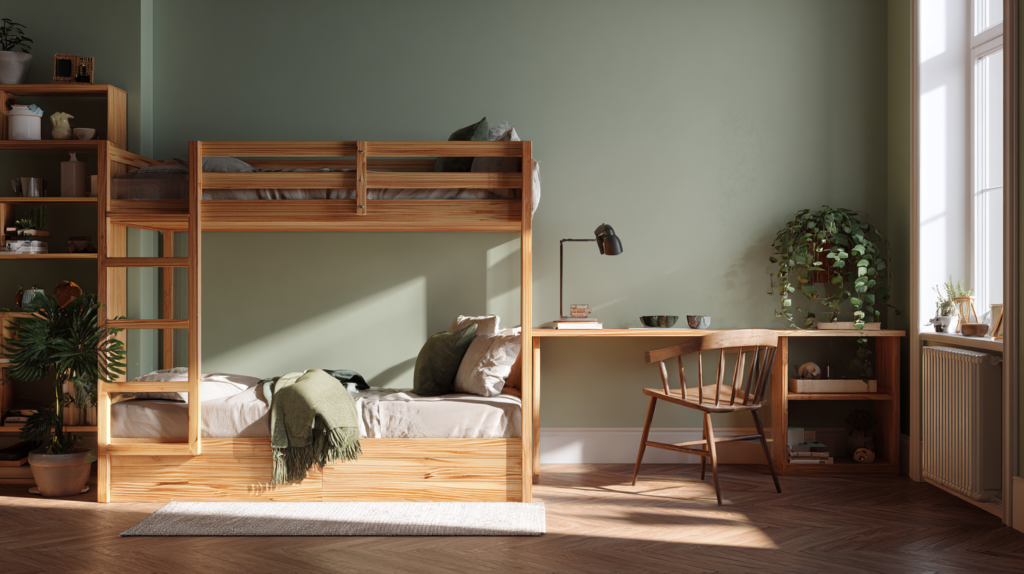
Once a child reaches school age, floor space for a desk becomes essential. Bunk beds with a built-in study area underneath solve this without requiring a separate desk — which in a small kids room, often isn’t possible anyway. Look for models where the upper bunk can be detached later, so the desk area stands alone as the child gets older.
Adjustable-height desks
For a dedicated study area, a height-adjustable desk is one of the best investments in a kids room. Furthermore, the ergonomic benefit matters: a child who sits at the wrong desk height develops poor posture quickly. An adjustable model bought at age 6 is still correct at age 14.
Beyond the bed and desk, modular shelving systems are worth the investment. Systems like IVAR (IKEA) or similar open-shelf units can be reconfigured completely as storage needs change — from toy bins at the bottom when young, to books and display items as they grow.
When choosing kids room furniture, apply the 5-year rule: would you still want this piece in the room in five years? If the honest answer is no — because it’s too themed, too small, or too specific — it belongs in the “accent” category, not the furniture category. Furniture should earn a long-term place. Personality items (a poster, a cushion, a bedside lamp) can come and go.
How to zone a kids room properly
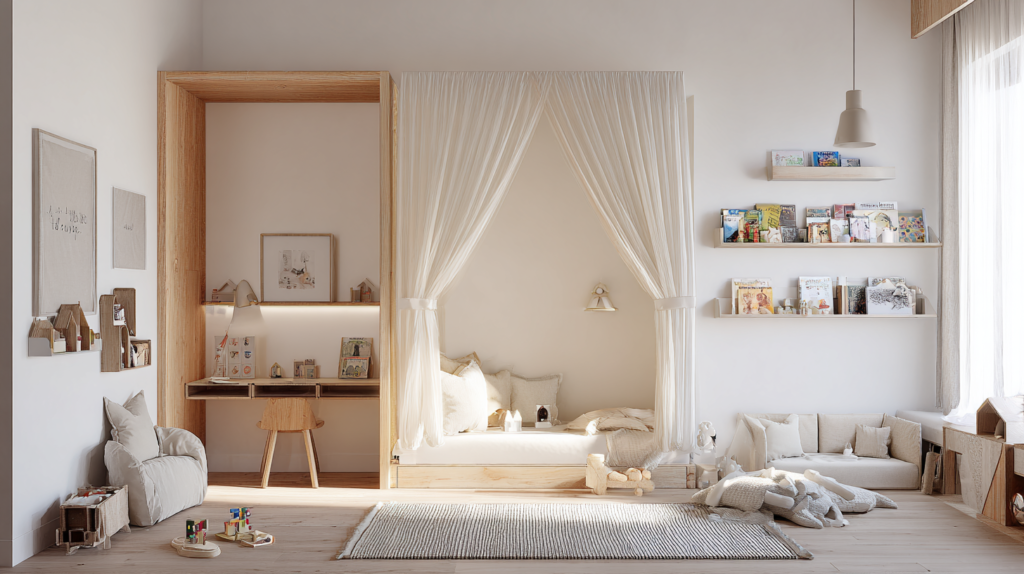
One of the most common kids room problems is that everything happens in the same place — sleeping, playing, studying, and being bored all blur together. As a result, the room feels chaotic and the child never feels settled. Zones fix this, even in small rooms.
For a kids room to work across different ages, it needs three distinct areas:
The sleep zone
This means the bed is positioned away from natural light sources (so it stays dark in the morning) and away from the play or study area. Even a low shelf or a canopy over the bed signals to the brain that this corner is for rest. In fact, sleep quality in children is measurably better when the bed area is visually separated from the rest of the room.
The play zone
This is the floor-level area — typically a rug, some cushions, open toy storage at child height. Most importantly, the play zone should be able to evolve: a teepee or reading tent at age four becomes a floor cushion reading area at age nine. Choose a quality area rug that you can keep for years — a natural jute or wool rug in a geometric or simple botanical print ages infinitely better than a printed children’s rug.
The study zone
From school age onwards, this is non-negotiable. A dedicated desk area — even a small 60 cm console depth — with good task lighting and organised storage signals to the child that this is a space for concentration. Because children mirror the environment’s cues, a well-designed study area genuinely helps with focus.
In a small kids room (under 10 m²), zones can be suggested rather than physically separated. A different wall colour behind the bed, a rug defining the play area, and a pendant light over the desk are enough to mentally divide the space.
Colour palettes that don’t expire
The fastest way to date a kids room is through the wall colour. Bold cartoon-themed murals, bright primary colours, or themed wallpaper all signal a specific age — and that signal becomes a problem within two or three years. However, this doesn’t mean a kids room needs to be dull.
The 2026 approach to kids room colour is warm and layered rather than either minimal or themed. Designers are moving away from primary colours and pastels alike, and toward earthy, calming palettes that read as sophisticated but feel warm and playful when furnished correctly.
Some of the best base colours for a kids room that will last:
- Warm white or off-white with natural wood accents — the safest long-term base, and still beautiful at every age
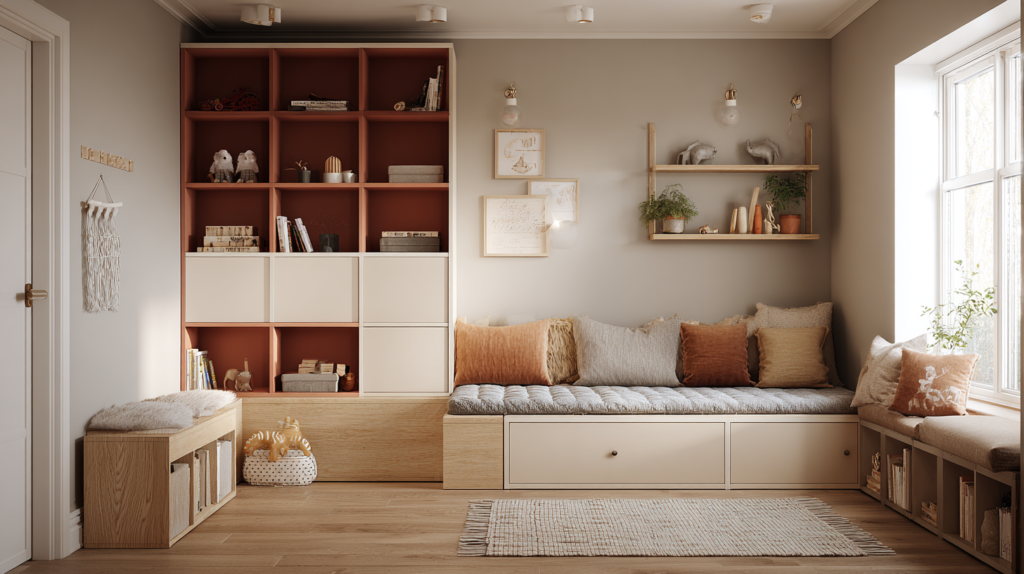
- Terracotta or clay — earthy, warm, calming, and very much at home in both Nordic and Baltic interiors
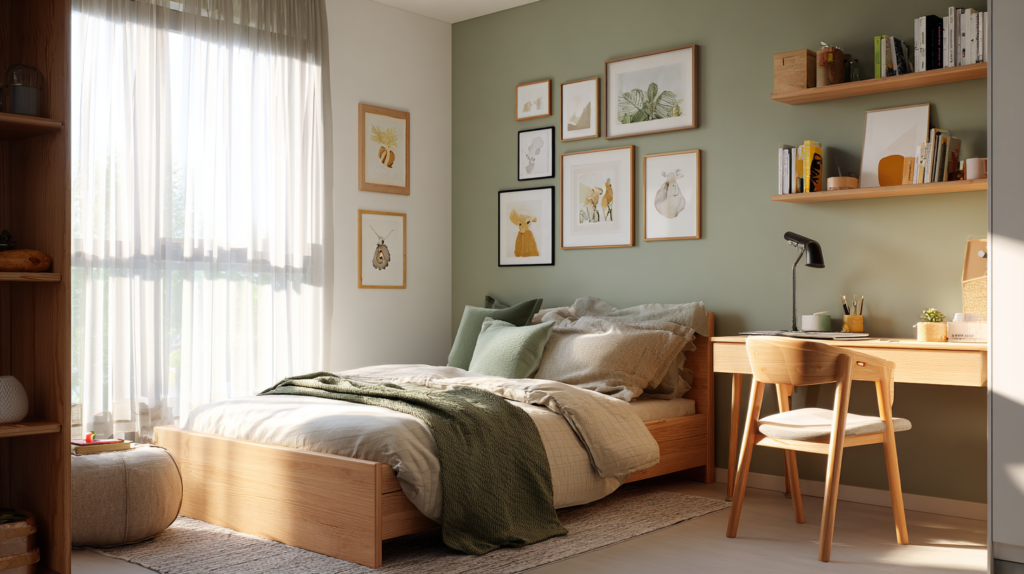
- Sage green — the colour of 2026 kids room design, because it reads as nature-inspired, calming for sleep, and grows from toddler to teen without requiring repainting
- Warm greige (grey-beige) — neutral enough to let any furniture or accessories define the mood
For walls, paint one feature wall in a richer tone (terracotta, sage, warm ochre) and keep the remaining three walls in warm white. This gives personality without commitment — the accent wall can be repainted in an afternoon as your child’s taste evolves.
Mural wallpaper is the one exception to the “avoid themes” rule. A botanical print, woodland scene, or abstract nature mural can work long-term if the imagery is sophisticated rather than cartoonish. Brands like Rebel Walls or Feathr offer beautiful large-format options that genuinely work in adult homes too — meaning they’ll still look right in five years.
Also consider that children’s rooms in Baltic and Nordic homes already have an advantage: the natural palette of these interiors — light wood, linen, soft greens — is perfectly aligned with the 2026 direction. You likely don’t need to start from scratch. In many cases, a new rug and a repainted accent wall is all a kids room needs.
🔨 Need a professional for this project?
Planning a full kids room redesign — built-in storage, a bunk bed with desk, or a proper zoned layout? Furnero is building a vetted directory of interior designers and carpenters across Europe who specialise in exactly this kind of project.
Storage that actually works long-term
In a kids room, storage is the detail that makes or breaks the design. Because children accumulate things faster than almost any other household member, the storage system needs to be generous, accessible, and — above all — adaptable.
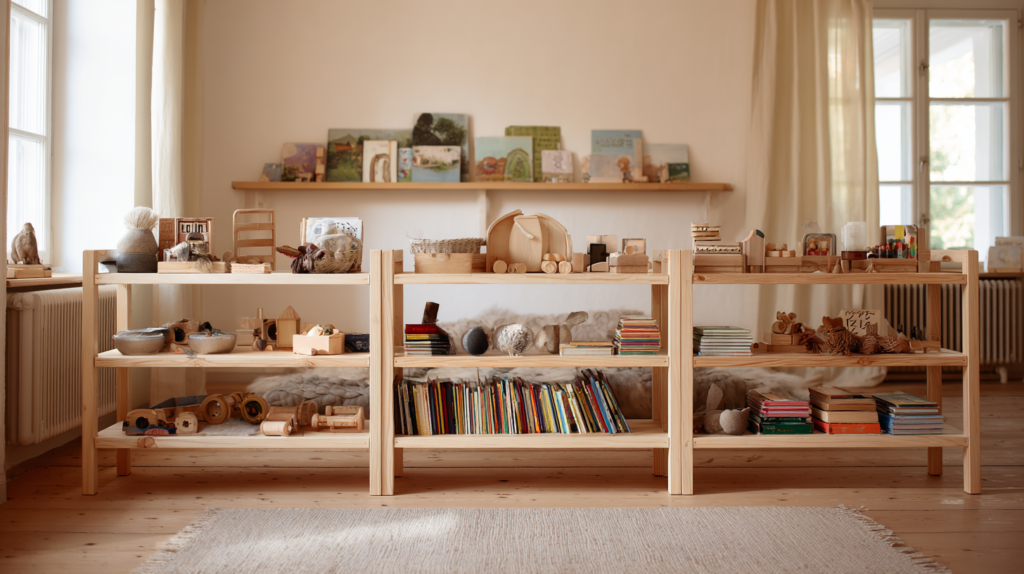
The most common mistake is designing kids room storage around current toy sizes. Plastic bins sized for building blocks become useless once the building blocks are gone. Open shelving systems are more forgiving because they can hold anything from toy cars to textbooks, depending on the age.
For a kids room that stays organised as the child grows, these storage principles work best:
Low open shelving at child height
From age three or four, children can put things away themselves if the shelf is at their level. This matters not just for tidiness but for independence — and independence is one of the biggest 2026 trends in kids room design. Montessori-inspired low shelving, where items are visible and accessible, supports this.
Under-bed storage
Platform beds or beds with built-in drawers use what is otherwise dead space. In a small kids room, this can replace an entire chest of drawers. Choose beds where the drawers are full depth — not the shallow decorative kind — as the storage capacity difference is enormous
Adjustable wardrobe interiors
A fitted wardrobe with an adjustable interior is one of the best investments in a kids room because the internal layout can change completely without replacing the unit. A hanging rail at toddler height becomes a full-length adult rail later. Shelf heights change as the clothes do.
For more ideas about storage ideas across all room types, check out guide on Homes&Gardens.
The real test: would you still love this kids room in five years?
Before committing to any major kids room decision — a paint colour, a bed, a built-in unit — apply one final test: imagine the room exactly as designed, but with a child who is five years older standing in it. Does it still look right? Does it feel like a room they’d be proud to have?
If the answer is yes, you’ve made a good decision. If the honest answer is “probably not,” something needs to change — not necessarily everything, but the specific element that will date fastest.
In most cases, the kids room elements that age best are the structural ones: good flooring, quality built-in storage, a proper desk area, and a bed in a simple natural material. The elements that age worst are the themed or highly specific ones: cartoon wallpaper, brightly coloured statement furniture, or accessories tied to a single pop-culture moment.
The good news is that a kids room built on flexible bones is easier and cheaper to update than one that requires full replacement. A can of paint, a new rug, two new posters and a different bedside lamp can completely transform the character of a room — without touching any of the furniture. That’s the ultimate goal of a well-designed kids room: a space where the investment holds its value, and the personality can evolve as freely as your child does.
✅ Key Takeaways
- A kids room built for flexibility costs less to maintain over time than one designed around a specific age or theme.
- The bed is the most important investment — choose natural wood in a simple low platform or bunk format that ages well.
- Zone the room into three areas: sleep, play and study — even in a small space, visual separation makes a real difference to how the room feels and functions.
- Earthy palettes (sage green, terracotta, warm off-white) give personality without expiring the way themed or primary-colour schemes do.
- Low open shelving at child height supports independence and keeps the room tidier — it’s one of the most impactful changes you can make in any kids room.
- Apply the five-year test to every major decision: if you wouldn’t still love it then, it shouldn’t be a structural part of the room now.
Ready to design a kids room that actually lasts?
Furnero connects homeowners with vetted interior designers and renovation professionals across Europe who understand how to design rooms that grow with your family.